
THE REAL REASON DESIGNERS HIDE AI FROM THEIR CLIENTS
There's a conversation happening in every studio right now, and it's happening in the group chat instead of the client meeting. The brief lands on a Tuesday. You quote a week, because a week is what this used to take. It takes you a day and a half, because you've got a workflow now and the workflow is very good. You don't lie on the invoice. You just don't volunteer anything either. The client is thrilled. You feel weird about it until roughly 4pm and then you get on with your life.
Am I the only one doing this? You are not. You are the overwhelming majority, and there's finally data to prove it.
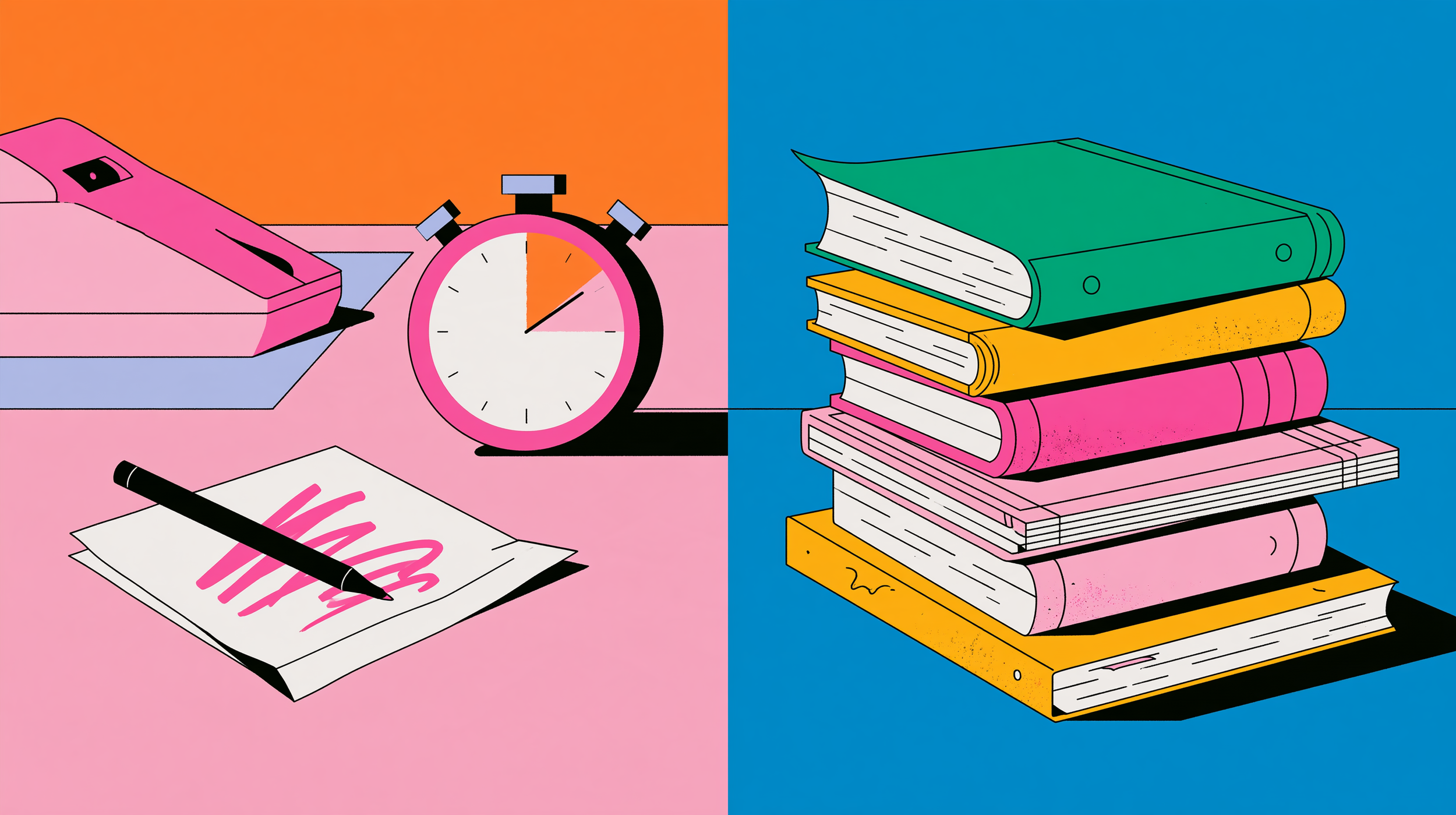
So should you tell clients you use AI?
Short version, for anyone who arrived here from a search box.
Yes, you should tell clients you use AI, and there's no legal requirement forcing you to. But disclosure only works once you've stopped selling time. If your quote is priced in days, telling a client that AI halved the days is a discount request you've handed over for free, which is exactly why 58 per cent of creatives don't say anything. Fix what's on the invoice first, then have the conversation. Done in that order it reads as competence. Done in the other order it reads as an opening bid.
That's the whole article. It's a pricing problem, not a moral one, and the rest of this explains why the industry got it backwards.
The number nobody says out loud
Envato surveyed 1,780 creative professionals worldwide for Beyond Adoption: The State of AI in Creative Work 2026. Forty-nine per cent use AI daily on client work. Fifty-eight per cent have used it without telling the client.
Those two numbers are the whole industry in one line. Half of us are doing this every day. Most of us aren't saying so.
The detail that should stop you is who's quietest. Split by business model, agency and studio owners always disclose least, at 28 per cent, behind freelancers on 31 and in-house designers on 35. The people with the most staff, the most exposure and the most to protect are the ones least willing to open their mouths.
And here's the properly odd part: 45 per cent of clients are already asking for AI, usually for speed or cost. The client brought it up. The studio is still doing the thing where you pretend you didn't hear a question at a dinner party.
This is a pricing problem in an ethics costume
Every take on this frames non-disclosure as a moral failure. Designers are hiding AI because they feel guilty. Because it makes the work feel less theirs. Because of some unresolved thing about authorship.
I don't buy a word of it.
Nobody has ever felt guilty about a Wacom. Nobody disclosed the grid, the stock licence, or the InDesign feature that turns a Friday into four seconds. Remember when Canva was going to kill graphic design? Designers are still here, Canva is still here, and nobody ever put a Canva disclaimer on an invoice. The craft has swallowed a hundred efficiencies without a single confession.
This one's different for exactly one reason, and it isn't moral. It's arithmetic.
If you sell time and the tool removes the time, disclosure stops being a values statement and becomes a discount request, gift-wrapped, that you hand over unprompted. Say "this took ninety minutes" and the client hears "so why am I paying for a week". So the industry made a quiet collective decision to say nothing and let the invoice do the lying by omission.
That held fine while AI was a small private efficiency nobody could see. It stopped holding about six weeks ago.
Nobody is announcing prettier pictures any more
Look at what the big players shipped this year, and notice what they didn't ship.
Adobe put Firefly Interfaces into beta in August. It runs batch jobs across up to 500 input assets, built out of real production workflows by the experts inside your organisation. Not one image. Five hundred. Then there's Project Graph, which Creative Bloq called Adobe's most important announcement of the year, and which lets you build the pipeline itself as a node graph. The deliverable stops being the artwork and starts being the machine that makes the artwork. Adobe MAX lands in Miami Beach on 10 November and nothing about the trajectory suggests a handbrake.
Then OpenAI released GPT-6 Astra on 3 and 4 September. Read the launch page and count how many words go to making a nicer picture. Almost none. The headline claim is computer use: multi-step software tasks in about 47 per cent less time per task than the model before it, plus documents and decks that hold to a template.
The image-quality race is over. The one that replaced it is throughput. Volume, batch, pipeline, and how few humans have to touch the middle of the job.
Now, five hundred variants of nothing is just AI slop at scale, and everyone can smell it. Five hundred variants of a real system, held to a real set of rules, with a person deciding what ships, is a product. That difference is entirely a design problem, which is the good news buried in all this.
The less good news: your clients read the same announcements you do. Plenty of them are already running your work past ChatGPT before they send feedback. The gap between what the software obviously does now and what your quote quietly implies about your week is visible from orbit.
Envato's CEO Hichame Assi named the underlying thing: "AI adoption is moving faster than AI literacy. The gap between enthusiasm and preparedness is where real opportunity exists."
He's right. And the gap is widest in the room you'd least like it to be.
The marketers commissioning your work are more AI-ready than you are
Here's the cut of the Envato data that belongs on a wall.
Daily AI use by discipline: web developers 65 per cent, marketers 60, content creators 58, 3D artists 58. Graphic designers and illustrators? Forty. Motion designers and videographers, also forty. Bottom of the table, both of them.
Now confidence. Marketers who feel "very prepared" for an AI-driven industry: 43 per cent. Graphic and motion designers: 26. Bottom again.
So the marketing lead sitting opposite you, holding the budget, is using this more than you are and feels nearly twice as ready to talk about it. That's a rough meeting to walk into holding a week-long quote and a shrug.
At least somebody counted us this time. The big AI in Design report earlier this year forgot graphic designers existed altogether, which tells you roughly how much of this conversation is being had without us in the room.
There's a geography to it too. Sixty-two per cent of British creatives and 49 per cent of American creatives report pressure to prove the value of human creativity, against 8 per cent in Asia and 11 per cent across the Middle East and Africa. The anxiety is concentrated exactly where day rates are most entrenched. That's not a coincidence, that's the whole thesis with a passport.
None of which is a reason to spiral. It's a reason to move, because an underserved discipline is one where a modest amount of clarity makes you the most credible person in the room. The bar is on the floor. Step over it.
Paula Scher already solved this on a napkin
Every graphic designer knows the story. Scher sketches the Citi identity in a first meeting, on a napkin, in seconds. The version that gets retold has a client asking how something that fast can be worth what it cost, and Scher pointing out that it took a few seconds plus the several decades that taught her how to do it in a few seconds.
That's the entire argument, and our own discipline worked it out before most of us were born.
She wasn't billing for the napkin. She was billing for the judgement that made the napkin inevitable. The speed was never the thing being sold, so the speed was never a problem to hide.
Which is why this whole conversation feels so uncomfortable right now. AI has handed the entire industry a napkin moment at once, and most of us are still pricing like the sketching is the job. It never was. Taste is the scarce input. Knowing which of the 500 to ship is the scarce input. AI moved the ceiling, not the floor, made adequate output infinite, and quietly turned your judgement into the only thing left worth paying for.
You just have to put that on the invoice.
Three fixes, none of which need you to feel bad
One. Change what you're selling, and disclosure costs you nothing.
If the quote is built on days, every efficiency you find is a bullet pointed at your own revenue. Rebuild it around the deliverable, the rounds and the rights.
Instead of: Brand identity, 12 days @ day rate.
Try: Brand identity. Three territories, two rounds of refinement, final logo suite, type and colour system, 20-page guideline document, full commercial usage in perpetuity.
The first is a number a client can check against a stopwatch, and the stopwatch stopped being your friend. The second is a number they can only evaluate against what it's worth to them. If you want the version of this with teeth, start measuring the effectiveness of the work as well, because a designer who can point at outcomes never has to defend a timesheet again.
Two. Write the AI clause before your client's legal team writes one at you.
Four lines. Fifteen minutes. Something like:
AI tools are used in parts of this project, typically for research, ideation, variant generation and production. All creative direction, selection and refinement is human-led. All delivered work is reviewed and approved by [studio] before release, and is cleared for commercial use. We'll tell you which tools were used at any stage on request.
Plain English, and short enough that someone reads it. It turns your biggest exposure into a document that makes you look like the organised one. There's a longer free AI clause template on the blog if you'd rather not start from a blank page, and if you want proof this isn't theoretical, Verónica Fuerte of Hey Studio put AI in her contract and the sky stayed where it was.
Worth being precise about what the law does and doesn't ask of you. The EU AI Act labelling rules care about marking AI-generated content for the public, particularly synthetic media. Essentially nothing in the law cares what you tell a paying client about your method. That bit's on you, and that's precisely why the contract is where it belongs.
Three. Show the pipeline, not the prompt.
There's a version of disclosure that reads as a confession and a version that reads as a capability.
"I used AI for some of it" is the first one.
"We built you a system that generates on-brand social kits, packaging variants and campaign adaptations against your guidelines, and a designer signs off on every one before it ships" is the second.
Same tools. Completely different meeting. The second is also a much bigger invoice, because you've stopped selling an afternoon and started selling the machine plus the person with the taste to run it.
That third move is the whole game and it's the one everyone skips. Batch was never a threat to your rate. It's a product you haven't packaged yet.
Say the quiet part, then send a better invoice
"The 58 per cent aren't hiding AI because they're ashamed of it. They're hiding it because they're still billing for time, and the time went away."
The fear under all of this is that disclosure devalues the work. It only does that if what you were selling was hours. Sell judgement, systems and accountability, and the tooling becomes a detail the client is glad to hear about, roughly the way they're glad their accountant uses software rather than a ledger and a candle.
The 58 per cent aren't villains. They're people whose pricing model expired faster than their contracts did. That's fixable, it's fixable this month, and it starts with a rate card rather than a moral reckoning.
So pick one. You can hide the tool or you can change the invoice. Only one of those still works in twelve months.
Scher's napkin was never about the napkin. Neither is this.
Got a team that needs to sort this out properly? The Cyborg Studio is our corporate programme for studios and in-house teams. We build the AI workflows, the disclosure position and the pricing logic together, so your people stop improvising it one nervous client call at a time.
Questions designers actually ask about this
Should designers tell clients they use AI? Yes, and sooner is better, but disclosure only works once your pricing has moved off hours. Tell a client you used AI while charging a six-day rate and you've opened a negotiation. Tell them while charging for a defined deliverable and a defined standard and it reads as competence. Fix the quote first, then have the conversation.
Do designers legally have to disclose AI use to clients? In most markets, no. Transparency law such as the EU AI Act covers labelling AI-generated content for the public, particularly synthetic media, not what a designer tells a paying client about their process. Your obligations to the client come from your contract, not the statute book. Which is exactly why the contract is the thing to fix.
How do you price design work when AI makes it faster? Stop pricing the input. Price the outcome, the rights and the accountability. Charge for the deliverable, the number of decision rounds, the usage licence and any ongoing system, rather than the days it occupied. Designers who moved to value-based pricing before 2026 have barely noticed this problem.
What should an AI clause in a design contract say? Four things minimum: which categories of tool you use and at which stages, what's human-directed versus generated, confirmation that outputs are commercially cleared and rights-appropriate, and who reviews and signs off the final work. Keep it plain English. The job of the clause is trust, not legal cover.
Will telling clients I use AI make them pay me less? Only if you've told them your price is a function of time. Envato's data has 45 per cent of clients already sometimes requesting AI, usually for speed or cost, so plenty of them have priced it in already. The risk isn't disclosure. The risk is disclosing while your rate card still describes a world that ended.
How many designers use AI without telling clients? Fifty-eight per cent. That's from Envato's Beyond Adoption: The State of AI in Creative Work 2026, a survey of 1,780 creative professionals worldwide. The same research found 49 per cent use AI daily on client work, and that agency and studio owners are the least likely group to disclose, at 28 per cent.
What do you say when a client asks whether you used AI? Answer plainly, then move straight to what you control. Something like: "Yes, at these stages, and every piece of it was directed and signed off by a person here. Here's the clause in your contract that covers it." The mistake is treating the question as an accusation and getting defensive. It's usually just a question, and 45 per cent of clients are asking for AI themselves.
Which designers are most exposed to all this? On Envato's 2026 data, graphic designers and illustrators sit at 40 per cent daily AI use, and motion designers and videographers also at 40 per cent, the lowest of the professional groups measured. They also report the lowest sense of preparedness, at 26 per cent feeling "very prepared", against 43 per cent of marketers. That combination, in disciplines whose output is highly reproducible by current tools, is the exposure. It's also the opening for anyone who moves early.
Ant Wood is the founder of House of gAi. Twenty years in advertising and design, including Havas Sydney and Ogilvy London, then a decade at Shillington Education finishing as Global Managing Director. He has sent and received a large number of the invoices described above.
Sources
Envato, Beyond Adoption: The State of AI in Creative Work 2026, survey of 1,780 global creative professionals, published November 2025
Adobe, Firefly What's New, August 2026 release notes (Interfaces beta, unified workspace beta)
Adobe, Project Graph announcement, November 2025; Creative Bloq coverage
OpenAI, GPT-6 Astra launch, 3 to 4 September 2026
Paula Scher's Citi identity story, as recounted in Abstract: The Art of Design and widely reported since. Referenced, not quoted, because the wording differs in every retelling.