
THE BRIEF IS NOT A BIBLE
The client didn't read the brochure. He fed it into ChatGPT and sent back a report. That story comes from a designer called Kip, who phoned James O'Brien on LBC recently to talk about what AI is doing to his business. Kip had designed a brochure for an electrician. He sent over the draft, and instead of feedback he got ChatGPT's assessment of his work, forwarded on. "It just broke my heart," he told O'Brien.
Every designer listening felt that in their chest. Which is exactly why we need to talk about what happened next.
The short version
When a client uses ChatGPT to critique your design work, the fix isn't a better comeback. It's evidence: research into their customers, a written strategy, and a rationale behind every important decision, so AI feedback becomes a conversation you lead instead of a verdict you survive. Here's how that works, starting with what went wrong on that phone call.
The comeback that felt brilliant and fixed nothing
Kip asked his client the question designers everywhere have been reaching for: would you trust AI to do your electrical work? The client said no. Absolutely not. Round of applause, mic drop, case closed. Except nothing closed. Nobody asked AI to do the work.
The client asked AI to check the work, and everyone lets AI check things now, electricians very much included. And the client isn't the villain here either. He's a tradesman staring at a brochure with no vocabulary for why it feels right or wrong, so he borrowed one.
Clients have been outsourcing their design opinions since design was invented: the spouse, the mate at the pub, the nephew who knows computers. ChatGPT is just the new nephew. This one happens to be articulate, free, and awake at 11pm. If your best defence against AI feedback is a zinger, you're not defending the work. You're buying a fortnight.
Sort of
Buried in that phone call was a two-word confession that explains more than the whole rest of the story. Kip mentioned he'd worked with this client for a while and "sort of" knew his business. Sort of. No shade. Most of us have said that exact sentence about a client, and plenty of good work has shipped on top of it. But it's the tell. AI feedback only hurts when there's nothing underneath the work to answer it with.
When a brochure is built on research, on knowing who the customer is and what makes them pick up the phone, an AI critique is barely an event. You read it, take the one useful note, and explain the rest. When the work is built on taste alone, any confident opinion can knock it over. And the nephew has never been more confident.
Without the homework, we're not the expert in the room. We're a pair of hands waiting to be told what to do. A pair of hands is the thing AI replaces best. Follow that logic to the end and it gets uncomfortable fast: if the client is directing and AI is critiquing, why wouldn't he ask AI to do the work too?
The brief is a symptom, not a diagnosis
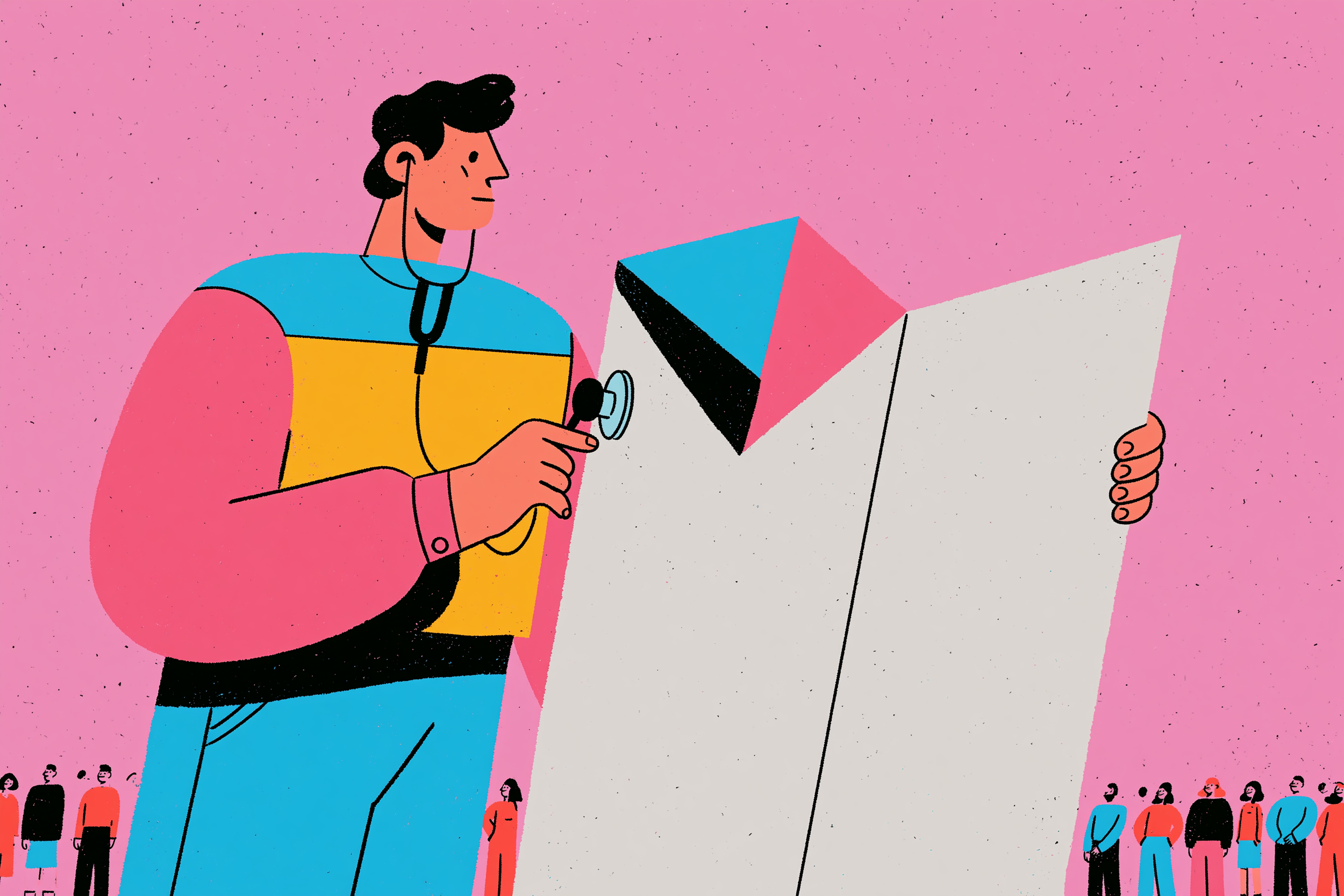
A design brief describes the problem as the client perceives it, not the problem itself. Treating it as the whole truth is where designers lose the room, so this is where the creative process has to change. When a patient walks in and says "I need antibiotics," a good doctor doesn't reach for the prescription pad. They ask what's wrong, run the checks, and treat what's found. The patient isn't stupid. They're just not the doctor.
The brief works the same way, and respecting it means investigating it, not obeying it. Kip's electrician asked for a brochure. That's the perceived problem. The real problem was something closer to "I'm not booking enough of the right jobs." Those are wildly different design projects.
A brochure judged on "do I like it" is at the mercy of every opinion in the room, human or machine. A brochure built to make renovation builders call can be measured, defended, and improved. Designers who treat the brief as a bible will always be at the whim of the client, because the client holds the only source of truth in the room.
Designers who treat the brief as a symptom get to hold something better: the diagnosis. Customer pain points the client hasn't articulated. The gap between what this business says and what its competitors say. The actual problem, not the perceived one. That's what being the expert means, and it's the only seat at the table AI can't sit in for you.
Show the thirty-four years
Paula Scher sketched the Citibank logo in a matter of seconds, in her first meeting, on a napkin. When the client pushed back on paying serious money for something so fast, her answer became design folklore: "It took me a few seconds to draw it, but it took me 34 years to learn how to draw it in a few seconds." Clients pay for the thirty-four years.
But only if they can see them. Judgment that stays invisible looks like a magic trick, and your clients now own a magic 8-ball of their very own. So the job is making the judgment visible, and it starts smaller than you think. Before the next job leaves your desk, write one page:
Who are we trying to persuade?
Why do they buy?
What must they think, feel or do after seeing this?
That page is a brand strategy in miniature, and every important creative decision should trace back to it. And now the part of this story nobody tells Kip: AI sits on both sides. The same technology that critiqued his brochure is the best research assistant a designer has ever had.
This is how we build that page now: Perplexity and deep research runs in ChatGPT and Claude, scouring thousands of Google reviews in the client's category to hear the exact words customers use when something's gone wrong, mapping what every competitor says about themselves, and finding the emotional white space nobody in the market owns.
Research that used to take an agency team weeks now takes an afternoon, if you know how to direct it. Kip's electrician didn't need a nicer brochure. He needed a designer who knew all of that about his renovation customers before a single layout existed. That workflow, research to strategy to defensible creative decisions, is the core of the AI Branding Masterclass.
So what do you say when the ChatGPT feedback lands?
Don't defend and don't dismiss: take the client through the feedback against the strategy, keep whatever serves the goal of the work, and explain the reasoning behind everything you're keeping as it is. With a strategy in hand, the feedback stops being a threat and becomes admin. "Good notes. Which of these helps get renovation builders to call? That's what this piece is built to do.
Here's why the headline leads with the guarantee, and here's the customer research behind it. Point three is fair, let's fix that." Now you're not defending your taste against a chatbot. You're walking a client through design decisions made on evidence about their customers. AI can generate opinions about design all day long. What it can't do is own a decision and be accountable for whether the work works. That part is the job. That part is you.
You can't defend vibes
The designers who come through this era fine won't be the ones with the best comebacks. They'll be the ones whose process produces evidence: real research, customer insight, a strategy the client can hold, a written rationale behind every important decision. Not because it wins arguments, though it does.
Because it changes what you are to the client: from a supplier of taste to the expert who solves the problem. You can't defend vibes. You can defend evidence. And if the honest answer is that your current process runs mostly on sort-of, that's not a character flaw. It's just the next skill, and it's learnable. The AI Branding Masterclass walks you through the whole evidence layer, from review-mining research to a strategy your client can hold in their hands. Grab the course guide and see what the process looks like.
FAQ
What should I do when a client uses ChatGPT to critique my design work?
Don't get defensive and don't dismiss it. Walk the client through the AI's notes against your strategy: acknowledge any note that serves the goal of the work, and explain the reasoning behind the decisions the AI flagged. If there's no strategy to check the notes against, that's the real gap to fix before the next project.
How do you defend design decisions to a client?
With evidence, not taste. Anchor every important decision to a written strategy: who the work is meant to persuade, why those people buy, and what the work must make them think, feel or do. Then present decisions as reasoning ("the headline leads with the guarantee because...") rather than preference.
How do I make my design work defensible before I present it?
Write a one-page strategy before the work leaves your desk: who are we trying to persuade, why do they buy, and what must they think, feel or do after seeing this. Every important creative decision should trace back to that page, so feedback becomes a conversation about evidence rather than taste.
What questions should a designer ask a client before starting a project?
Go past the deliverable to the diagnosis: what business result should this work produce, who is the customer and what pain points drive them, why do customers choose you over competitors, and how will we know the work has worked? The answers turn a brief into a strategy you can defend.
Will AI replace graphic designers?
AI is replacing undifferentiated execution: work directed entirely by the client and judged entirely on taste. Designers who research the customer, diagnose the real problem behind the brief, and take accountability for whether the work performs are doing something AI can't own, and that work is becoming more valuable, not less.