
SHIT IN, SHIT OUT: WHY DESIGNERS KEEP GETTING AVERAGE AI RESULTS
Over the last six months, almost every designer I talk to has started using AI. Students, studio owners, in-house teams I train, the lot. That part's done. Nobody's asking whether any more. What almost nobody has is a system.
They open a chat window, type a question the way they'd type it into Google, take whatever comes back, and then tell me, a bit deflated, that AI is kind of average. The moodboard's beige. The headlines read like a bank. The logo concepts look like every other logo concept on Dribbble this year.
Maybe it's just not that good for real design work. It's good. You're just feeding it rubbish. Shit in, shit out.
And before anyone gets defensive: it isn't your fault. Nobody gave you the time to learn this properly, and nobody taught you the fundamentals. That's the real problem, and it's fixable.
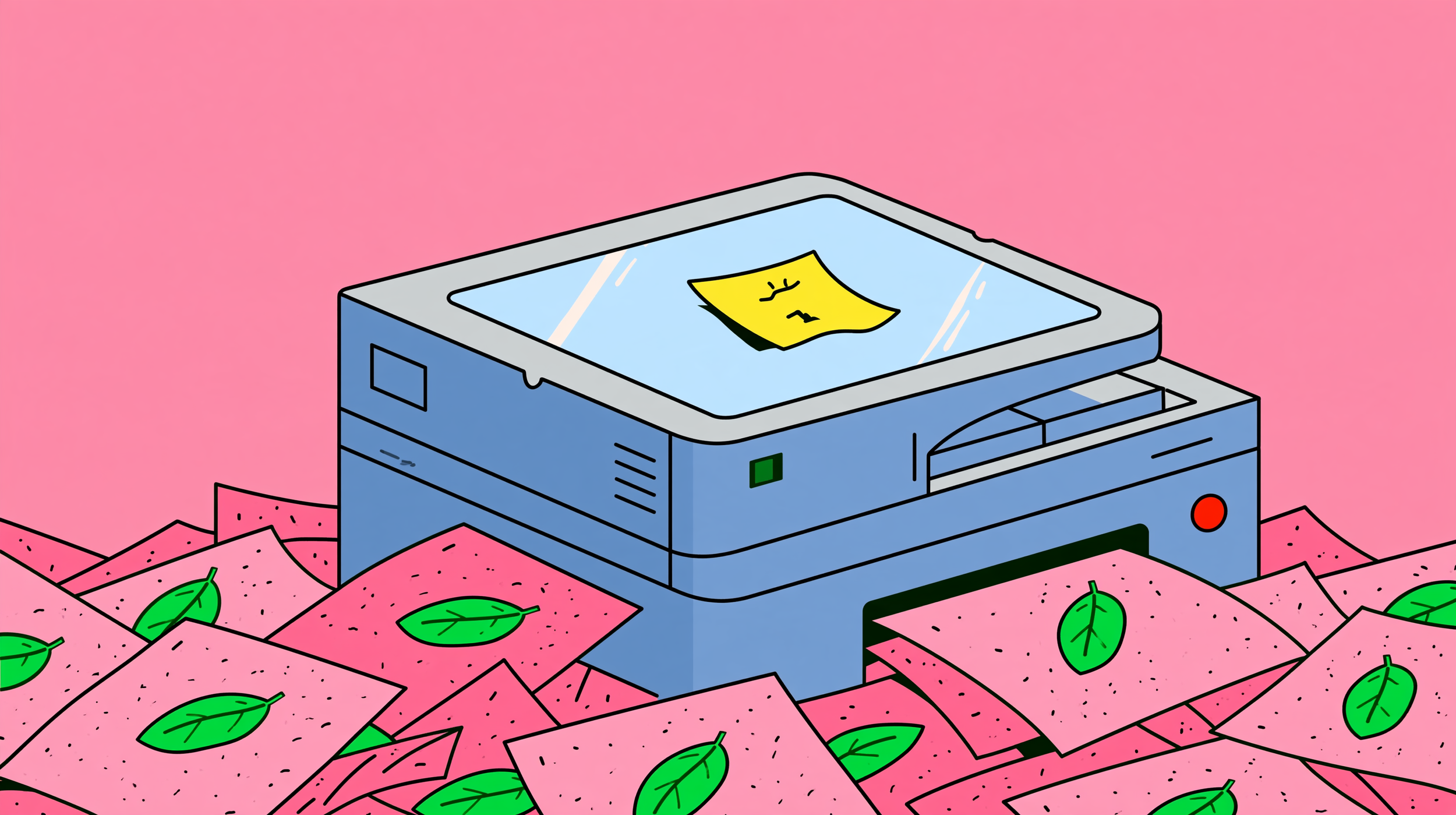
Why your AI outputs look generic
If you searched your way here, here's the answer up front.
Your AI outputs look generic because you're asking generic questions and accepting first answers. Large language models and image models return the most probable response to whatever they're given, and a short, vague prompt has a very average most-probable answer. Specific, designer-quality input (audience, tension, references, what to avoid, what good looks like) gets specific output. Then you iterate and edit like an art director. Most designers skip all of that because they're learning AI in stolen time, with no one showing them how.
That's the argument. The rest is the evidence, and what to do about it.
The apprenticeship nobody signed up for
Here's the deal most designers have been handed in 2026: do your job, and also become fluent in AI. Same hours. Same deadlines. Same client who wants round three by Thursday.
It isn't just you. In a June 2026 TalentLMS survey of 1,200 US employees, 53 per cent said heavy workloads leave little room for learning. A January 2026 Study.com survey found only a third of workers using AI had any training from their employer. Nearly half had learned by trial and error.
I learned design the old way. Every agency I worked in, from Havas in Sydney to Ogilvy in London, taught the craft the same way: sit next to someone better, watch, get corrected, do it again. That's an apprenticeship. It comes with a master and a wage.
The AI version comes with neither. It happens at 11pm on a Sunday, with a YouTube tutorial on 2x speed and a Monday meeting where someone says "can't we just AI this?"
An apprenticeship with no master and no wage isn't an apprenticeship. It's homework.
You're using it like Google, and it shows
Twenty-five years of search engines trained all of us to believe the skill is the query. Type four words, get ten blue links, pick one, move on.
A language model works the other way round. It builds an answer from whatever you gave it, and four words in means it fills every gap with the most average assumption available. That's where the beige comes from.
You already know this, you just know it from a different job. You'd never hand a junior designer "moodboard for a sustainable coffee brand" and expect anything good back. You'd tell them who the customer is, what the brand is pushing against, the three references you love, the two clichés you never want to see again (kraft paper, a leaf), and how you'll judge the result. That's a brief. It's the thing we're paid to write. Somehow we forget it the second the other side is a chat window, which is why I keep telling designers to stop prompting and start briefing.
The TalentLMS data has the scary version of this. Half of employees say they use AI to complete tasks even when they don't understand the process behind them. Thirty-seven per cent say AI makes them look more competent than they are. That's the trap in one stat: output that looks finished at a glance and falls apart the moment someone with taste looks twice.
It happens at company scale too. Ford has rehired, hired or promoted 350 experienced engineers after the veterans left and, as The Next Web reported, its automation "amplified weak inputs rather than catching design flaws." Different industry, same law of physics. The machine multiplies what you put in. Put in nothing and it multiplies nothing, very quickly.
Average output is a gift to the stakeholder with a prompt box
Here's why this matters more than a slightly disappointing moodboard.
Your marketing manager has the same tools you do. So does the founder, the account director and the client who's been running your work past ChatGPT. If your AI-assisted work looks like what they could make on a Tuesday afternoon, you've just handed them the argument for not needing you.
Generating a design and designing are not the same job. The value lives in the brief, the hundred small decisions, the taste to know which of forty options is right and why the other thirty-nine aren't. AI makes average infinite. Your taste is what's scarce. But taste only shows up in the work if you've built a way of working that lets it in.
That's the whole point of the argument that AI moved the ceiling, not the floor. The floor is free now. Anyone can stand on it. Your job is to be visibly, obviously above it.
What IKEA understood that Ford didn't
In 2021, Ingka Group, IKEA's biggest franchisee, rolled out an AI customer service bot called Billie. Over two years it handled 47 per cent of customer queries to its call centres, according to Reuters.
The obvious move was to cut the call centre. They didn't. Since 2021 they've retrained 8,500 call centre workers as remote interior design advisers, people who already knew the products, the customers and the thousand ways a flat-pack kitchen goes wrong. That remote design channel brought in €1.3 billion in the 2022 financial year, 3.3 per cent of total sales, with a target of 10 per cent by 2028.
"We're committed to strengthening co-workers' employability in Ingka, through lifelong learning and development and reskilling, and to accelerate the creation of new jobs," Ulrika Biesert, Ingka's global people and culture manager, told Reuters.
Put the two stories side by side. Ford let its experience walk out the door and then paid to buy it back. IKEA kept its experience, gave it time to learn something new, and pointed it at something more valuable than answering the phone.
Your judgement is the institutional knowledge in this story. You're the call centre worker who knows every product. The smart move for any company is the IKEA move: give that person the time and training to go up a level. The alternative is the Ford move, and it's expensive.
AI lets everyone skip the gap. Except you
There's a quote every creative has had forwarded to them at least once, usually at a low moment. Ira Glass, the This American Life host, on beginners:
"All of us who do creative work, we get into it because we have good taste. But there is this gap."
The gap is between your taste and your ability. For years your work isn't as good as you know it should be, and the only way through, he says, is volume: "the most important thing you can do is do a lot of work."
Here's what changed. AI hands everyone a shortcut across that gap. Your stakeholder can now produce work miles beyond their ability, and because they never had the taste, they can't see that it's beige. It looks finished to them. That's why they think generating is designing.
You don't get the shortcut, because you can see the beige. Your taste is still ahead of what you're getting out of the tools, and the only way to close that gap is the way Glass said: reps. As RuPaul has been telling us since 1992, you better work.
Which is why stolen time doesn't work. Reps squeezed in at 11pm are rushed reps. You grab the first output because you're tired. You never iterate because the tutorial ended. You build the Google habit, because the Google habit is fast, and fast is all you had time for.
A system, not a search bar
The good news: the fundamentals aren't complicated. They're the same fundamentals you already use with humans, pointed at a new collaborator. Three of them fix most of it.
1. Brief, don't search. Before you type anything, write the brief you'd give a talented junior. Who's it for. What's the tension. What good looks like. What you never want to see. References, attached. It takes five minutes and it changes everything that comes back. Save your best briefs and reuse them, because a brief library is a system and a history of one-off chats isn't. (While you're at it, set up the three Claude settings most designers ignore, so it knows who you are before you start.)
2. Iterate, don't accept. The first output is round one from a junior. You'd never send that to a client. Tell it what's working, what isn't and why, then go again. Push it off the obvious. Ask for the weird version. Five rounds of art direction beats fifty fresh prompts.
3. Judge, don't generate. Your job at the end is the edit. Which option is on-brief, and can you say why in one sentence? If you can't explain the choice, you haven't designed anything yet, you've just shopped.
Brief, iterate, judge. None of it's new. What's new is doing it on purpose, every time, instead of treating the chat window like a search bar with better manners.
Running a studio? You're the manager in this story
If you own the studio, nobody's going to email you asking for learning hours. They'll learn it quietly at 11pm, or not at all, and you'll end up with five designers using AI five different ways, none of it written down.
That's the Ford version. The IKEA version is cheap by comparison: a fixed block of hours, one live job to learn on, and a shared brief library everyone adds to. The library is the bit most studios miss. It turns five people's private habits into one studio system, so the quality of the work stops depending on who happened to open the chat window that morning. If you'd rather someone else ran it for the whole team, that's what The Cyborg Studio is for.
Freelancers, you're both people in this story. Block the hours in your calendar like a client, because they are one.
How to ask for the time (we wrote the email)
This bit's for anyone employed, in-house or in an agency.
Your company already expects you to be AI-fluent. Most of them just haven't budgeted the hours for it, because nobody showed them the maths. So show them.
Frame it as a business cost, not a personal favour. Self-taught AI use produces inconsistent work and rework. Protected learning time is cheaper than both. Ask for something small and specific: two hours a week for eight weeks, one live project to learn on, and a show-and-tell at the end where you walk the team through a real before and after. Put it in outcomes, not feelings. If your studio already talks about measuring the effectiveness of your work, borrow that language.
And if they say no, have a fallback ready: a training budget instead of hours, or a one-project pilot.
We've written the whole thing for you. Ask for the time is a one-page business case plus a fill-in-the-blanks email to your manager. [Grab it here] and send it this week.
Designers have been handed "learn this new thing on your own time" before, with desktop publishing, with the web, with every Adobe update since. When Marcus Byrne traced four generations of designers through every tech panic, the pattern was the same each time: same tools, different mindsets. The mindset part is yours. The time part is a fair thing to ask for.
Give yourself a better teacher
If you'd rather not build all of this alone at 11pm, that's what the AI Branding Masterclass is for. It's the structured version of everything above: a real brand project, taken from strategy to identity, with a system for using AI at every stage and a cohort of designers doing it with you. I spent ten years running design education at Shillington, and the thing I'm surest of is that working adults learn fastest with structure, feedback and protected hours. The next cohort starts in January 2027, and early-bird pricing is open until 13 November.
Either way, stop blaming the tool.
AI didn't make your work average. Your Sunday-night crash course did.
Questions designers and studios ask about this
Why do my AI outputs look generic? Because generic input produces generic output. AI models return the most probable response to what you give them, and a short, vague prompt has a very average most-probable answer. Write a proper brief (audience, tension, references, what to avoid, how you'll judge the result), iterate on the first output instead of accepting it, and edit hard at the end.
How long does it take a designer to get good at AI? There's no fixed number, but fluency comes from repetition with feedback, not from tutorials. A realistic starting point is a couple of protected hours a week on a live project for about two months, using the same brief, iterate and judge process every time. Rushed, occasional practice builds bad habits that take longer to undo.
Should my employer pay for AI training? If your employer expects AI fluency, it's reasonable to ask them to fund the time to build it. Frame it as a business cost: self-taught use leads to inconsistent work and rework, while a small block of protected time on a live project is cheap and measurable. House of gAi's free Ask for the time template gives you a ready-made business case and email.
What should a brief for AI include? The same things a good brief for a junior designer includes: who the work is for, the tension or problem it solves, references you love, what you never want to see, and how you'll judge the result. Five short lines is enough. Save the good ones in a brief library so you're not starting from scratch each time.
How should a design studio train its team on AI? Give the team protected hours rather than expecting them to learn on their own time. A fixed weekly block, one live job to learn on, and a shared brief library everyone adds to will turn individual habits into one studio system. Without that, each designer uses AI differently and the quality of the work depends on who opened the chat window.
What's the difference between prompting and briefing? Prompting is typing a request and taking what comes back, much like a search query. Briefing is giving the AI what you'd give a talented junior designer: who the work is for, the problem it solves, references, constraints, what to avoid, and what good looks like. Briefing takes a few minutes longer and produces far more specific, usable work.
Sources
TalentLMS, Learning Debt Report 2026 (1,200 US full-time employees, June 2026): https://www.talentlms.com/research/learning-debt-report
Study.com AI workplace survey (1,000 employed workers), reported by eWeek, 30 Jan 2026: https://www.eweek.com/de/news/survey-ai-workplace-training-gap/
Ford rehiring 350 engineers, The Next Web, 26 June 2026 (originally reported by The Verge): https://thenextweb.com/news/ford-rehired-350-engineers-ai-quality-jd-power
Reuters, "Ikea bets on remote interior design as AI changes sales strategy", 14 June 2023, via FashionNetwork: https://uk.fashionnetwork.com/news/Ikea-bets-on-remote-interior-design-as-ai-changes-sales-strategy,1526097.html
Ira Glass on the gap, transcript via kottke.org: https://kottke.org/20/12/the-gap-between-having-good-taste-and-doing-good-work