
DESIGN WAS NEVER NEUTRAL. NEITHER IS AI.
Inclusive design in the age of AI, with Studio Lutalica's Cecilia Righini. Why design inclusivity is now a front-line creative decision, not an afterthought.
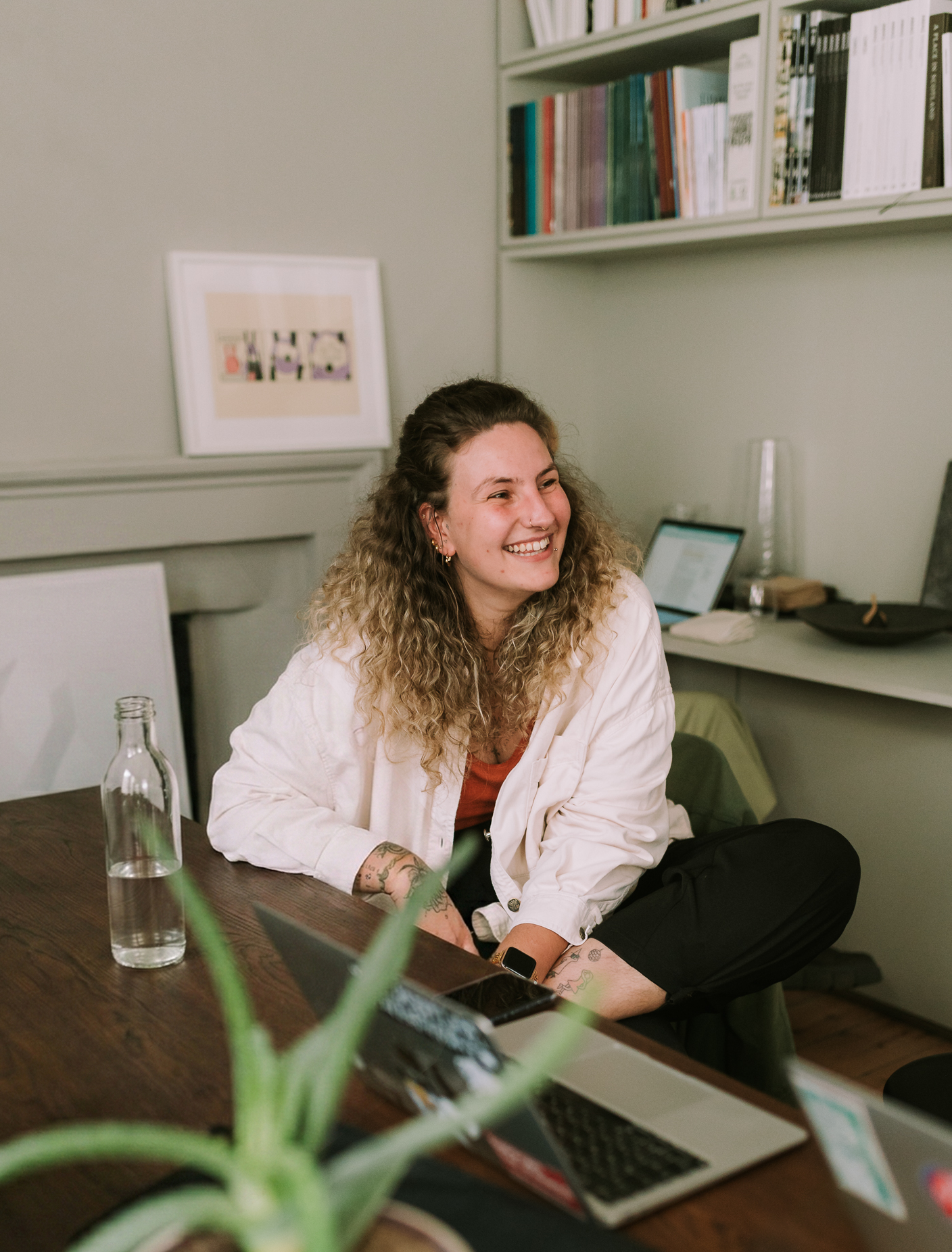
Cecilia Righini
The short version. Generative AI tools default to a narrow, Eurocentric ideal unless a human deliberately steers them otherwise. Inclusive design in the age of AI means putting the people most likely to be designed out, disabled, queer, trans and racialised communities, at the centre of the work. Designer Cecilia Righini of Studio Lutalica shows how, live and free at House of gAi's Creative Futures Hub on Tuesday 28 July 2026.
When Vogue ran one of its first AI-generated models in 2025, a flawless blonde, fair-skinned woman fronting a Guess campaign, the internet melted down. But the sharpest reaction wasn't outrage. It was recognition.
Here's the punchline. Hand a machine the power to generate any human who has ever lived, or never lived, and fashion's first instinct was the same face it has been selling since the 1950s.
That's the thing nobody tells you about generative AI. Left alone, it doesn't dream up the future. It autocompletes the past in higher resolution. Which is exactly why inclusive design matters more now, not less.
So we did the obvious thing. We invited someone who has spent their whole career refusing to let that happen.
The part that doesn't fit the category
Meet Cecilia Righini (they/them): founder and creative director of Studio Lutalica, a queer and feminist design studio in Edinburgh built around inclusion and accessibility.
The name is doing a lot of work. Lutalica, borrowed from John Koenig's Dictionary of Obscure Sorrows, means "the part of your identity that doesn't fit into categories." As a queer, non-binary, neurodivergent designer, Cecilia had spent a lot of life being asked to round themselves down to fit a box. The studio was a way of doing the opposite. In their words, "you don't have to shrink to belong here."
They started it at 25, working full time and finishing an MA, after a realisation that reframes the whole job: the discrimination they kept hitting in the industry wasn't a one-off. It was the design. "Design has a huge responsibility in directing who is seen, trusted, and safe in the world," Cecilia says. They kept meeting women- and LGBTQ+-led organisations doing extraordinary work, held back by design that didn't match the quality of their care. So they built a studio where lived experience sits at the centre.
Six years on, Studio Lutalica is a non-profit Community Interest Company that has delivered 240+ projects for 130+ organisations, from Oxfam to ILGA World, and redistributed around £56,000 in pro-bono and discounted work since 2023. It has picked up a Lovie Award and a Great British Entrepreneur Award along the way, both in 2024. Cecilia is a visiting practitioner at the London College of Communication and sits on the boards of Equality Network, Firstport and Proud Futures.
But ask what they are proudest of and you don't get a project. You get a feeling. "Design is the vehicle. Belonging is the point."
Hold that thought, because it is about to meet a very large machine.
Why is AI biased by default?
The critical designer Ruben Pater said it cleaner than anyone: "Design is never neutral." Every typeface, every stock photo, every default carries a point of view. Designers have argued this for decades. AI just dragged the argument into daylight and handed everyone the receipts.
Here's the uncomfortable bit. These models learn from oceans of existing images, and those images lean hard into one ideal: white, thin, young, symmetrical, able-bodied. So when you type "a beautiful model" or "a successful CEO," the tool doesn't give you a neutral answer. It gives you the average of everything it was fed. Then, studies suggest, it pushes that average past reality, sharpening the stereotype instead of softening it.
The result is a quiet flattening. Faces, bodies and whole cultures squeezed into one frictionless "AI look," the visual equivalent of every brand suddenly adopting the same sans-serif. For an industry that spent a decade widening its lens, that isn't innovation. It's a U-turn at scale, running on autopilot.
This is the exact terrain Cecilia has worked for years, long before the AI gold rush rolled in. Which is why they can talk about it without either doom-spiralling or hand-waving it away.
Whose job is it to fix it?
Cecilia's answer is refreshingly unfussy. "Inclusive design in the age of AI means making sure the people most likely to be designed out, disabled, queer, trans and racialised communities, are the ones designing in. The tools are only as inclusive as the hands and the values shaping them."
And here is where it gets hopeful, because this is not a doom session. Cecilia sees these tools as access, not just threat. "Creativity doesn't live in the hand that makes something. It lives in the brain that imagines what's possible." Used on purpose, the same tools that flatten can also expand, building things underrepresented makers never could before because the budget or the technical means weren't there. "This time," they point out, "as underrepresented people, we actually have a chance to help shape how this next phase goes, rather than having it shaped for us."
That is the choice at the heart of the talk. As Mike Monteiro reminds designers, the craft comes with "the power to choose." AI just raised the stakes on every choice you make.
What you're walking into
The format is loose and human. Cecilia opens with a short run of slides on their work and their lens, then drops into a fireside chat with House of gAi founder Anthony, with your questions to close. Expect honest, practical, occasionally spicy territory:
Where inclusion cracks first the moment you open a generative tool
The gap between being inclusive and looking inclusive, a.k.a. diversity-washing
What responsible practice looks like inside a real workflow, not a manifesto
The first moves you can make literally tomorrow morning
Where AI is actually worth the hype
Cecilia put the takeaway better than we could: "Accessibility and inclusion aren't a constraint on good design. They are the brief. And in the age of AI, whose defaults we accept might be the most important design decision we'll ever make."
If you're trying to use these tools without quietly erasing the people you're designing for, pull up a chair. This is your room.
The takeaways, if you're skimming
Inclusive design is the brief, not a finishing touch.
Generative AI defaults to a narrow ideal, so a human has to redirect it on purpose.
"Diversity-washing" looks inclusive without being inclusive.
Used intentionally, AI can widen access, not just flatten representation.
Whose defaults you accept may be your most important design decision.
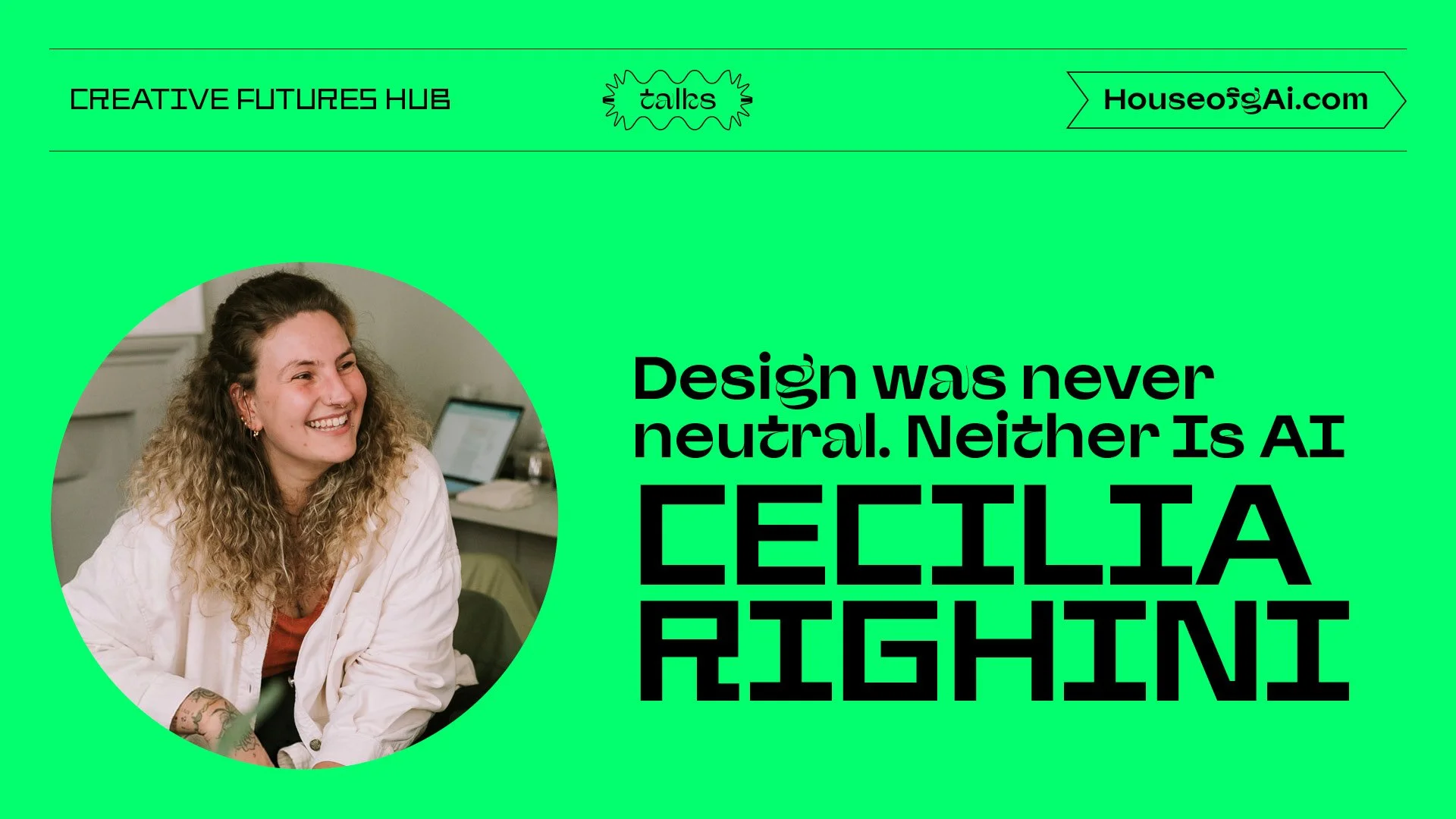
Join us: Cecilia Righini at the Creative Futures Hub. Inclusive / non-biased design in the age of AI.Tuesday 28 July, 6pm UK (7pm CEST, 1pm ET, 11am Mexico City).
Free for the community, like always. Save your spot here.
Frequently asked questions
What is inclusive design in the age of AI?
Inclusive design in the age of AI means deliberately putting the people most likely to be excluded, disabled, queer, trans and racialised communities, at the centre of the work, because generative tools default to a narrow ideal unless a human steers them otherwise. As Cecilia Righini puts it, "the tools are only as inclusive as the hands and the values shaping them."
Why is generative AI biased by default?
Image models learn from vast datasets that skew toward one ideal (white, thin, young, symmetrical, able-bodied), so a neutral prompt returns the average of that data. Research shows models can amplify these stereotypes beyond real-world rates rather than simply reflecting reality.
What is diversity-washing in design?
Diversity-washing is using a diverse-looking output, such as an AI-generated model, to appear inclusive without doing the underlying work of hiring, representing or paying diverse people. It buys the look of inclusion while skipping the substance.
How can designers make AI outputs more inclusive?
Name the default and challenge it. Write specific, representative prompts, audit outputs for who is missing (skin tone, body, age, disability, culture), keep a human decision-maker accountable, and treat accessibility and inclusion as the brief rather than a final polish.
Who is Cecilia Righini?
Cecilia Righini (they/them) is the founder and creative director of Studio Lutalica, a queer and feminist non-profit design studio in Edinburgh, and a Lovie Award and Great British Entrepreneur Award winner (2024). They are speaking on inclusive design and AI at House of gAi's Creative Futures Hub on 28 July 2026.
Studio Lutalica is a non-profit. If the session lands for you, you can support their work: donate from the US, or donate from the UK and rest of the world. Find Cecilia at ceciliarighini.com and the studio at lutalica.studio.