
WILL AI REPLACE DESIGNERS? WHY “GOOD ENOUGH” DESIGN IS THE BIGGER RISK
I’ve been reading a few “AI warning” pieces lately and… yeah. The vibe is consistent: something is shifting, it’s shifting fast, and the people closest to it are suddenly speaking in full caps-lock energy. Here’s my take as a designer:
I don’t think AI is “better than designers.” I think AI is about to make average output infinite.
And that’s more disruptive than replacement. Because when average becomes infinite, the market stops rewarding “making.” It starts rewarding choosing.
The question “will AI replace graphic designers?” keeps resurfacing in every design forum, panel, and AI webinar. As AI and graphic design become increasingly intertwined, the true future of graphic design isn’t about AI replacing us—it’s about AI making “good enough” design unlimited, pushing us to elevate judgment, taste, and creative direction.
TL;DR
AI isn’t (yet) better than designers, but it’s making “good enough” output unlimited. That shifts value from execution to creative direction, editing, and strategy. The most important skill now is taste with receipts: clear rationale, constraints, and decision-making clients can trust. Ads inside AI assistants are a warning sign because incentives can quietly distort “helpful” into “profitable.” Ignoring AI is career-limiting; learning when and how to use it is now essential for working designers.
AI isn’t coming for designers. It’s coming for indecision.
Most people don’t actually want “AI art. or creative” They want what clients have always wanted: clarity.
They want the thing that takes a vague brief, a scattered stakeholder meeting, and a “we want it to feel premium but also fun but also disruptive” email and turns it into something you can defend, sell, and ship.
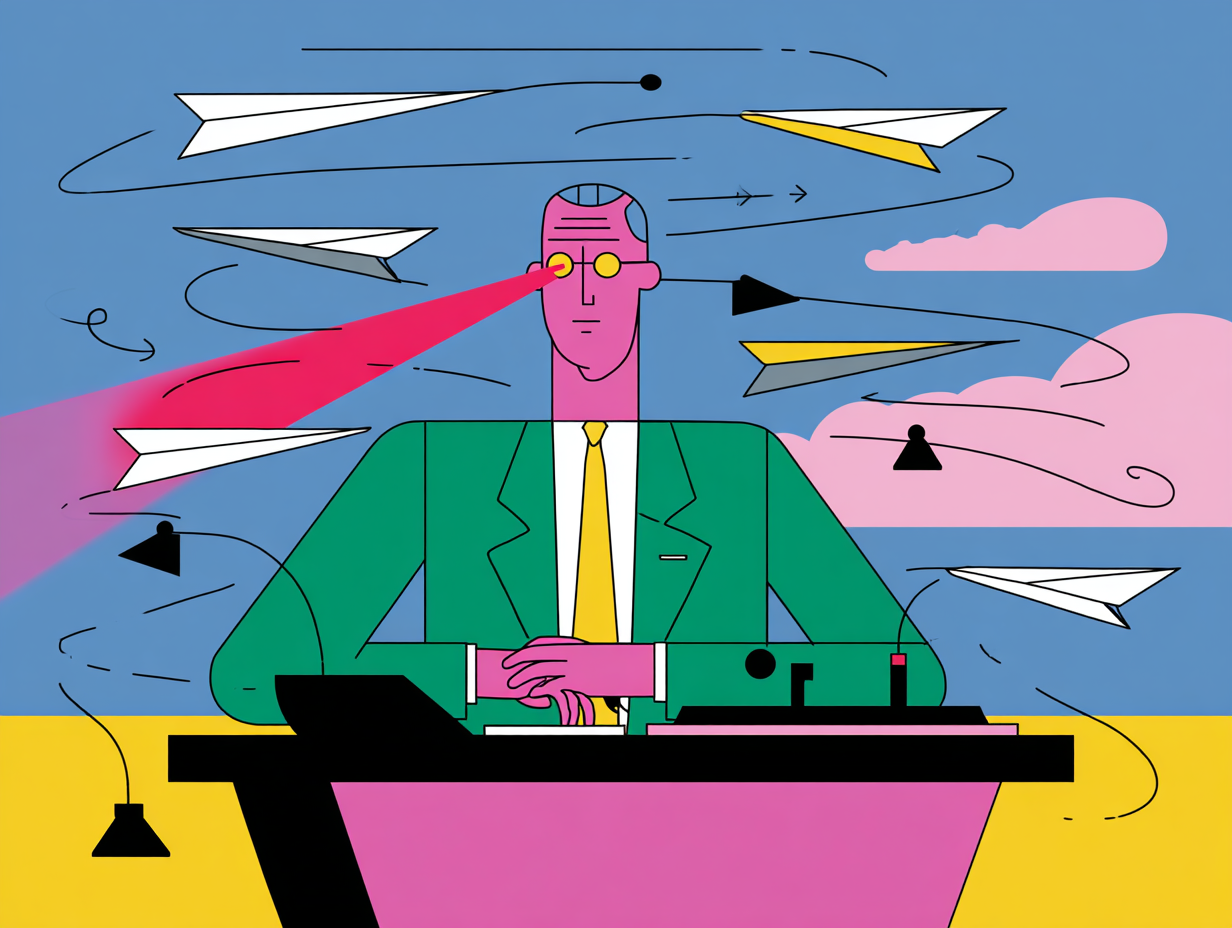
Right now, AI can generate a thousand options. That part is easy. The hard part (and the valuable part) is the move that comes next: Killing 998 of them.
That’s not a prompt. That’s judgment. AI makes noise extremely well. Designers make signal. And signal is the new luxury.
The most valuable design skill in the AI era: taste with receipts
If you’re using AI like a vending machine, your workflow probably looks like this:
Prompt → output → dopamine → more output → overwhelm → “AI is replacing us” → lie down → stare at the ceiling.
I get why that feels unsettling. But the issue isn’t the tool. It’s the relationship. The next era isn’t “who has the cutest prompts.” It’s “who has the clearest process.”
This is why workflow-based tools feel like a genuine shift. When you can generate, then select, constrain, refine, remix, and art direct, something important happens: Your taste stays in charge.
That’s why I’m so interested in tools like Weavy. It takes AI from “random generations” to a considered workflow, where you build a controlled environment and your job becomes what designers are actually trained to do: direct, edit, decide.
And when production becomes cheap, your edge is not speed. Everyone gets speed. Your edge is discernment.
Here’s the phrase I want designers to steal: Taste with receipts.
It means you can say:
“Here’s why this direction is right for this audience.”
“Here’s what we tested and rejected.”
“Here’s the strategy that drove the visual decisions.”
“Here’s why this isn’t just pretty. It’s purposeful.”
That’s not fluff. That’s career insurance.
The moment the AI assistant starts selling, the tool stops being neutral
Now let’s talk about the thing that made my stomach do a small somersault: ads inside the assistant. Because that isn’t a feature. It’s a philosophical pivot.
Instagram is a billboard you scroll past.
An AI assistant is different. People tell these systems things they don’t tell their friends. They workshop identity. They confess insecurities. They ask for scripts for hard conversations. They share what they’re scared of, and what they want next.
So hearing that an AI system might use “everything it knows about me” to sell me stuff feels like a violation.
Not because I’m precious about privacy, but because it changes the relationship. An assistant is supposed to be on your side.
Ads introduce a second client into the room. Even if ads don’t directly change answers, the incentive architecture is now sitting there like a silent creative director with a KPI.
Designers should recognize this pattern instantly. We’ve spent our whole careers watching incentives distort products. When monetization becomes the hidden stakeholder, “helpful” starts competing with “profitable.”
And the subtle version of that future isn’t a moustache-twirling villain. It’s worse. It’s boring.
It’s:
gentle nudges toward sponsor-friendly tools
safer, more market-tested aesthetics
more “what performs,” less “what’s true”
fewer sharp edges because sharp edges don’t convert
That’s not a conspiracy. That’s what happens when the business model becomes the brief.
The real creative danger isn’t automation. It’s aesthetic inflation.
When everyone can generate “good enough,” we get a new kind of sameness. Not from lack of talent. From overproduction without direction. Everything gets shinier. Everything gets more “designed.” And at the same time, everything gets less specific.
Because specificity is expensive.
Specificity requires taste. Reference. Critique. Conviction. It requires the ability to commit to something a little weird and a little real.
AI can help you make more. It can also keep you busy forever. So the real risk for designers isn’t losing work. It’s losing the ability to tell what work matters.
Spicy truth: ignoring AI is career-limiting
I’m not saying “panic.” I’m saying “pay attention.”
The split is already forming:
Designers who use AI to avoid thinking will produce a lot and say very little.
Designers who use AI to extend thinking will become lethal.
AI is a multiplier. It multiplies what you bring. If you bring confusion, you get more confusion. If you bring taste, you get a bigger studio.
So no, AI isn’t “replacing designers.” It’s replacing the middle layer of the process where people pretend taste is optional.
How designers should use AI (a simple creative workflow)
If you want one practical shift this week, it’s this: stop treating AI like a slot machine.
Use it like a studio assistant inside a repeatable workflow:
Define constraints (audience, brand personality, category rules, what “success” means)
Generate options (fast exploration, lots of range)
Choose a direction (one or two lanes, not ten)
Constrain again (references, type logic, palette logic, composition rules)
Iterate intentionally (small changes with purpose)
Document decisions (what changed, what stayed, and why)
Package the story (strategy → direction → execution → proof)
That last part is what clients pay for. Not the output. The judgment.
What I’m actually advocating: design-led AI literacy
Not “become a prompt engineer.” Not “make content faster.” Design-led AI literacy looks like:
Knowing when AI adds value (exploration, iteration, synthesis, production support)
Knowing when it undermines value (strategy, ethics, accountability, originality, cultural nuance)
Building workflows that keep humans in authorship
Educating clients that strategy and thinking behind creative decisions is what makes work resonate
Because in the AI era, the most premium thing you can sell isn’t a logo. It’s judgment.
The bottom line
The warning signs are there. Pretending AI is optional is a fantasy we can’t afford.
But here’s the hopeful part: If you’re a working designer with taste, and you’re willing to build modern workflows, this moment isn’t the end of your relevance.
It’s the beginning of a new kind of power. Not the power to make more. The power to make meaning, on purpose, inside the noise.
If you want to learn how to integrate AI into a real brand workflow without losing authorship, taste, or standards, that’s what we do inside AI Branding Masterclass.
Make brave work. Keep your receipts.
And please don’t outsource your taste to a machine that’s trying to sell you oat milk and “productivity supplements.”
FAQ
Q1. Will AI replace designers?
AI is unlikely to replace designers outright. Instead, it is changing how value is created. As AI makes “good enough” output abundant, designers who provide judgment, strategy, and creative direction become more valuable, not less.
Q2. What is the most valuable design skill in the AI era?
Judgment. Taste. Creative direction. The ability to kill 998 options and keep the two that actually fit the audience and the strategy. In short: discernment.
Q3. What does “taste with receipts” mean?
It means your taste isn’t just vibes. You can explain the why: audience logic, brand strategy, constraints, iterations, decisions, and what you rejected. It’s taste that’s client-ready and defensible.
Q4. Why are ads in AI assistants a problem?
Because assistants feel relational. People share personal context inside them. Ads introduce incentives that can nudge recommendations toward profitability rather than purely user benefit, even subtly.
Q5. How should designers use AI without losing originality?
Use AI to expand exploration and speed up iteration, but keep humans in charge of strategy, ethical judgment, cultural nuance, and final selection. Build a repeatable workflow and document your decisions.
Q6. What’s one thing I should do this week?
Stop using AI like a slot machine. Set constraints, generate range, choose a direction, iterate with intention, and document decisions so your work is defendable and client-ready.