
WHY THE BEST DESIGNERS ARE USING AI JUST FOR FUN
Here's a take you won't hear at most AI conferences: the most useful thing you can do with AI right now has nothing to do with your clients. No briefs. No deliverables. No ROI to justify. Just you, a blank canvas, and the question: what happens if I try this?
The conversation around AI in design has been dominated by two camps — the breathless optimists promising it'll make you 10x more productive, and the anxious pessimists convinced it's coming for your career. Both camps are missing something. The designers who are actually advancing their relationship with AI aren't doing it through fear or hype. They're doing it through play.
And nobody embodies that better than Simone Attanasio.
The problem with treating AI like a deadline
Most designers approach AI the same way they approach a Monday morning brief: reluctantly, under pressure, trying to get something usable out of it as fast as possible. Which is understandable. Time is scarce. Clients are impatient. The learning curve is real.
But here's what that approach costs you: the chance to actually get good at it.
The designers who've genuinely integrated AI into their creative practice—not just bolted it on as a productivity tool—almost all describe the same turning point. They stopped trying to make AI useful and started making it fun. The skills came as a byproduct of the enjoyment.
Corita Kent, the artist and educator who spent decades teaching people to trust the making process, put it simply: "Nothing is a mistake. There's no win and no fail. There's only make." That's the energy. That's the unlocked version of working with AI.
The problem is that most of us never give ourselves permission to just make.
What Vibe Coding for Designers actually looks like
Simone Attanasio is a design leader at Canva, founder of Therapy for Designers, and the creator of aijustfor.fun — a personal AI lab he runs purely for the sake of it. No product roadmap. No KPIs. Just experiments.
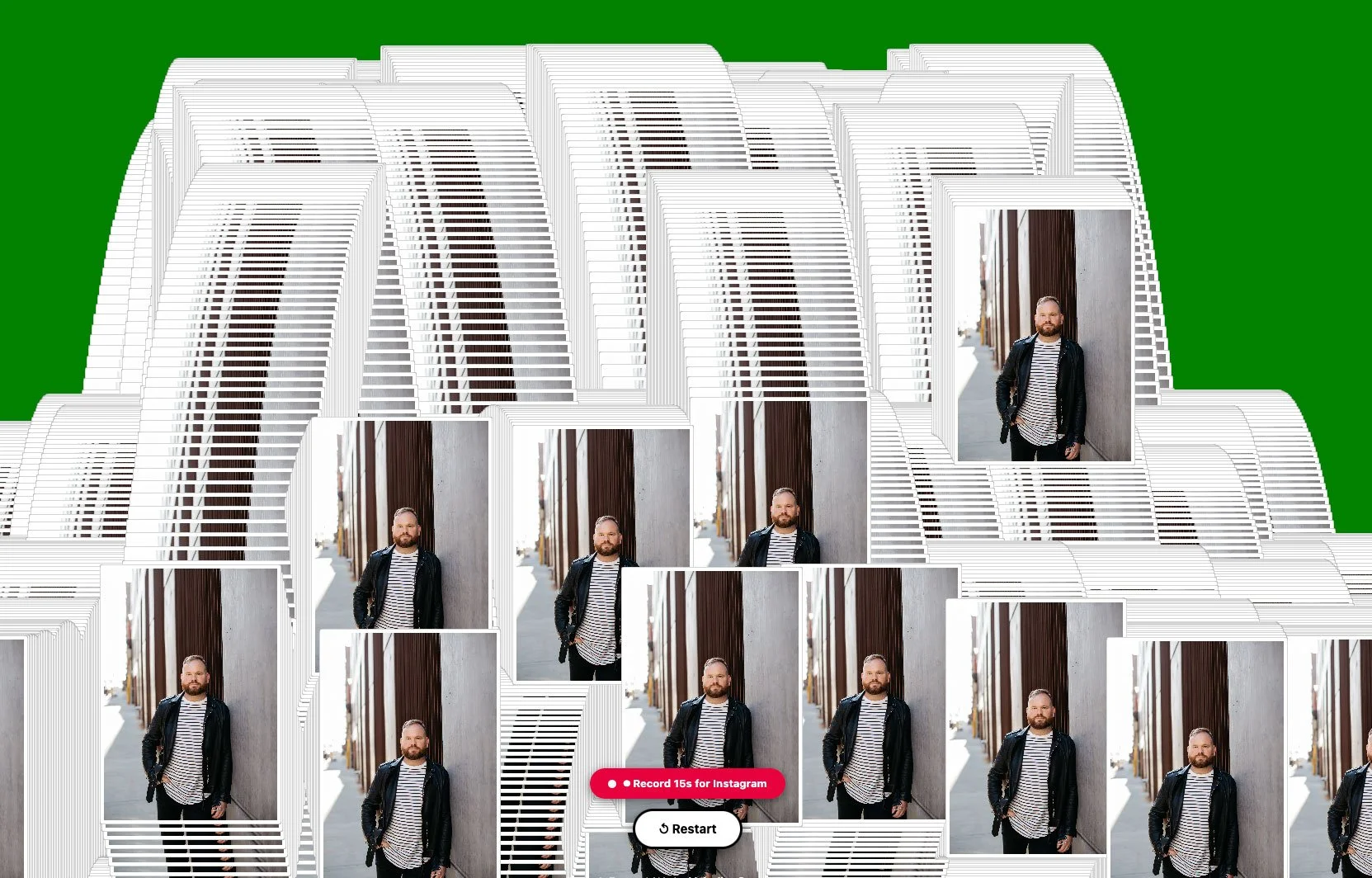
One of those experiments is a Solitaire game that replaces the card faces with your own photo and lets you record a 15-second Instagram Story of the result. It's delightful. It's silly. It's exactly the kind of thing that takes an afternoon to build and teaches you more than a week of tutorials.
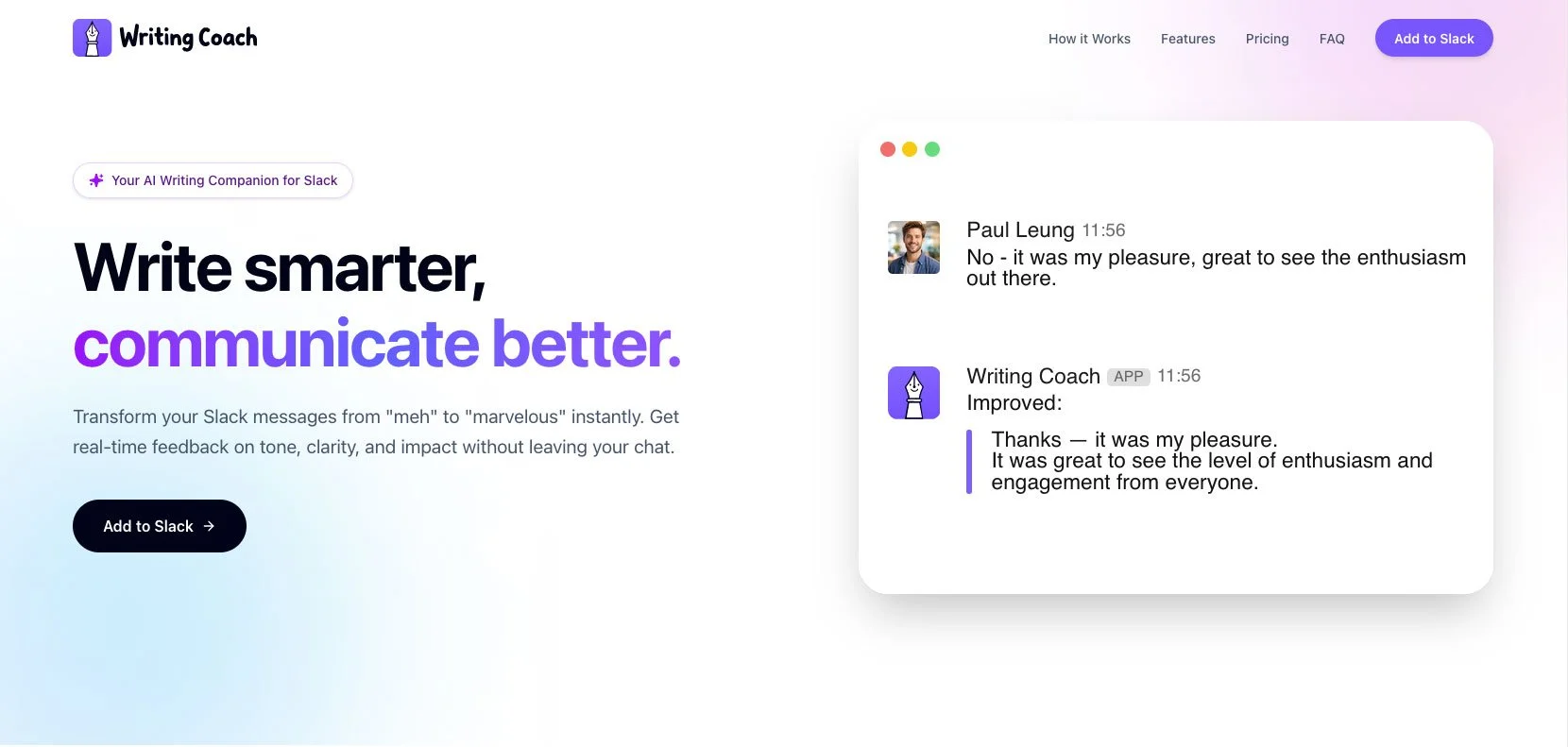
He's also vibe-coded a Slack writing coach app — writingcoach.info — built over a weekend, live on the internet, made because he wanted it to exist. No team. No budget. No approval process.
This is what vibe coding for designers actually looks like: not a polished product launch, but a proof of concept you built because you were curious. The "vibe" part isn't about being casual — it's about removing the performance pressure that stops most designers from trying anything at all.
And the skills that come from that kind of building? They transfer directly to client work. Fast prototyping, sharper prompting, a more intuitive sense of what AI can and can't do. You just have to earn them on your own time first.
The serious work makes the play meaningful
What makes Simone's perspective particularly valuable for designers is that he's not just a tinkerer… he's operating at the sharp end of where AI meets professional design.
He led the design of the first connector between Canva and ChatGPT, and has been working on Visual MCP — a framework for building AI-powered design workflows that go well beyond "generate an image." He's thinking about how AI agents change the relationship between designers and their tools at a systems level.
Which makes the personal AI lab more interesting, not less. When someone with that depth of professional experience chooses to spend their free time building a face-swap Solitaire game, it's not a distraction from serious work. It's evidence that play is how serious people stay sharp.
The designers who'll thrive aren't the ones who learned AI first. They're the ones who never stopped being curious.
Why play is actually a professional strategy
There's a reason Simone also founded Therapy for Designers — a community built specifically to support designers navigating the psychological weight of an industry in rapid transition. He understands, firsthand, what the anxiety does to creative work. It narrows the aperture. It makes you defensive. It turns curiosity into caution.
Play is the antidote. Not as a productivity hack, but as a genuine recalibration of your relationship with the tools. When you build something with AI just because you wanted to see if you could, three things happen:
First, you get over the intimidation. The blinking cursor stops being a judgement and becomes an invitation.
Second, you start to understand the texture of the tool — what it's good at, where it surprises you, where it falls short. That texture is invisible if you only ever use AI under pressure.
Third, and most importantly: you remember why you got into design in the first place. The making. The seeing. The thing Simone describes as feeling like the early days of the internet, when people were just building stuff because it was fun.
AI makes average output infinite. Your taste, your curiosity, and your willingness to experiment are what's scarce. Protect those by using them.
Join the conversation
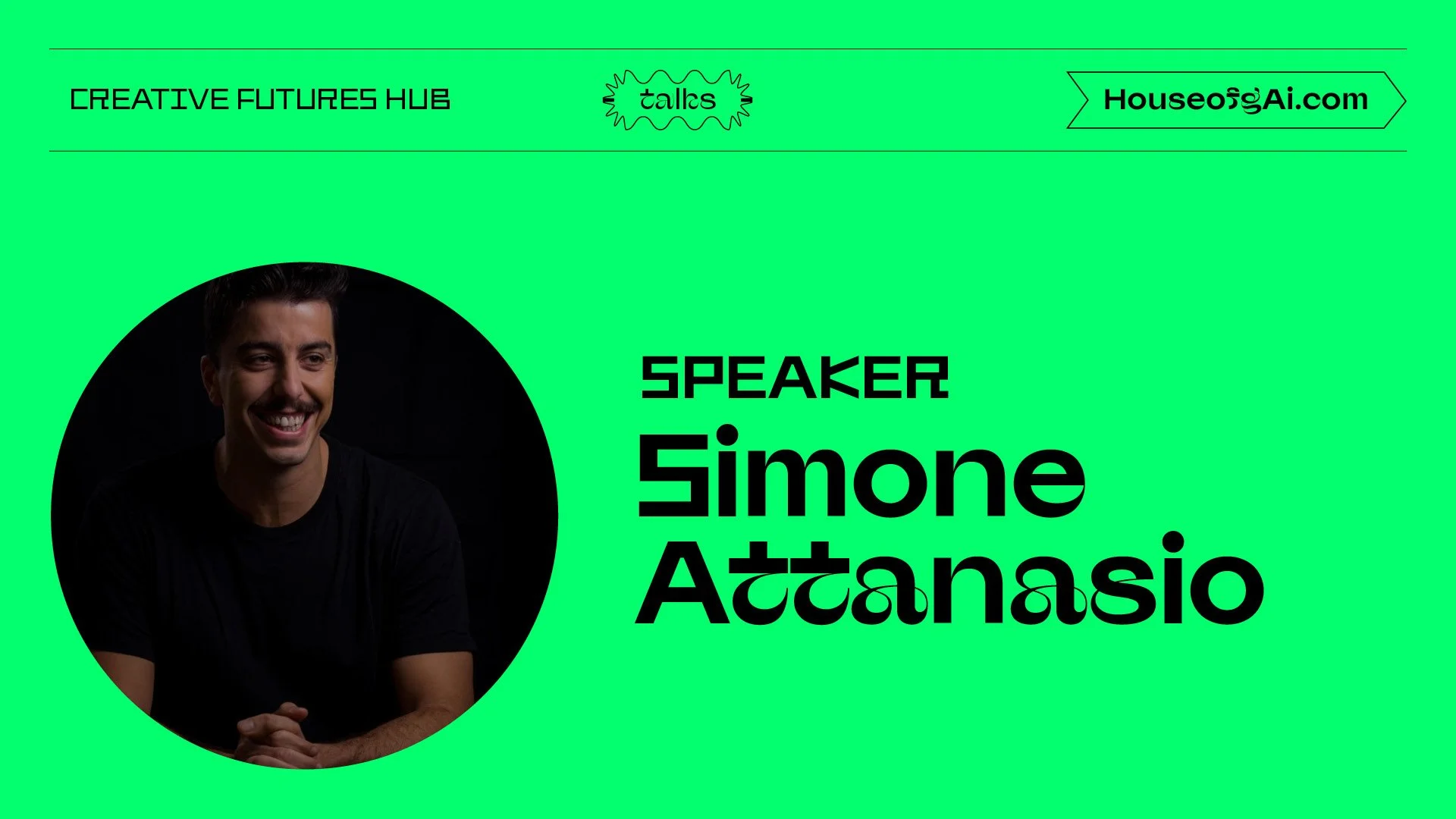
On Wednesday 22 April AEST, Simone is joining the Creative Futures Hub for a live fireside chat — AI Just for Fun — where we'll dig into exactly this: what shifts when you treat AI as a toybox, not a threat, and what boutique agency designers are completely missing when they write AI off as an image generation tool.
It's free for Creative Futures Hub members. Join the community here to get access.
FAQ: How Designers Are Using AI
Q. How are designers actually using AI in their workflow?
A. Designers are using AI across a range of tasks — from rapid prototyping and concept development to image generation, copywriting, and building custom tools. The most effective practitioners tend to use AI iteratively, treating it as a studio assistant they direct rather than a machine that produces finished work. Tools like ChatGPT, Claude, Midjourney, and Figma AI are common in design workflows, but increasingly designers are also vibe coding custom apps and tools tailored to their specific needs.
Q. What is vibe coding and how does it apply to designers?
A. Vibe coding refers to building software through conversational AI prompting — describing what you want in natural language and iterating rapidly, rather than writing traditional code. For designers, this opens up the ability to build custom tools, prototypes, and interactive experiences without a development team or budget. Designers like Simone Attanasio have used vibe coding to ship Slack apps, interactive web experiences, and personal AI projects over a weekend.
Q. Do designers need to learn to code to use AI effectively?
A. No. Vibe coding and AI-assisted development have dramatically lowered the barrier to building functional tools and prototypes. Designers can describe what they want to build in plain language and use AI to generate the underlying code. Understanding basic logic and being able to test and iterate is more important than writing syntax from scratch. The core skill remains design thinking — AI handles more of the technical execution.
Q. Is AI going to replace graphic designers?
A. AI is changing what graphic designers spend their time on, but it is not replacing human creative judgment, taste, or art direction. As AI makes average output infinitely scalable, the value of human perspective, curation, and creative direction increases. Designers who integrate AI into their workflows — using it to prototype faster, explore more ideas, and build things they couldn't before — are expanding their creative capacity, not being replaced by it.
Q. What's the best way for a designer to start using AI?
A. The most effective starting point is play, not productivity. Rather than trying to immediately integrate AI into client work, try building something small with no stakes attached — a personal tool, a creative experiment, a prototype of something you've always wanted to exist. This removes performance pressure and builds genuine familiarity with how AI tools behave. From there, skills transfer naturally into professional workflows.