
ELEVEN DAYS THAT REDREW THE DESIGN STACK. HERE'S WHAT IT MEANS FOR GRAPHIC DESIGNERS.
Five months ago I wrote that Photoshop in ChatGPT wasn't for designers. It wasn't a tool — it was Adobe positioning itself for a future where creative intent forms in chat, not in apps. I called the separation early: chat becomes the intent layer, professional tools become execution engines, Photoshop becomes infrastructure. I thought that future would take a year. Maybe two. It took five months.
On April 17, Anthropic launched Claude Design. Adobe stock dipped about 2% by close of business. On April 28, Adobe shipped a partnership with the same lab. Eleven days. That's not capitulation. That's strategy at the speed of a panic attack — and if you're a designer, that pace tells you everything you need to know about where the floor is moving right now.
So let's talk about what actually shipped, what it confirms about the architecture I called in December, and what you should actually do about it before Monday.
TL;DR
Anthropic shipped nine creative-tool connectors on April 28, the headliners being Adobe, Blender, and Affinity by Canva
The structural move: the AI model is now the orchestrator, the apps are endpoints — the architecture I outlined in December, made real
The connector compresses the executional middle of design work — resizing, retouching, social adaptation, batch ops
It does not touch concept, taste, or creative direction — that gap is now the most valuable part of your job
Adobe lists Illustrator and InDesign as integrated apps. Adobe shipped exactly zero dedicated skills for either. We'll come back to that
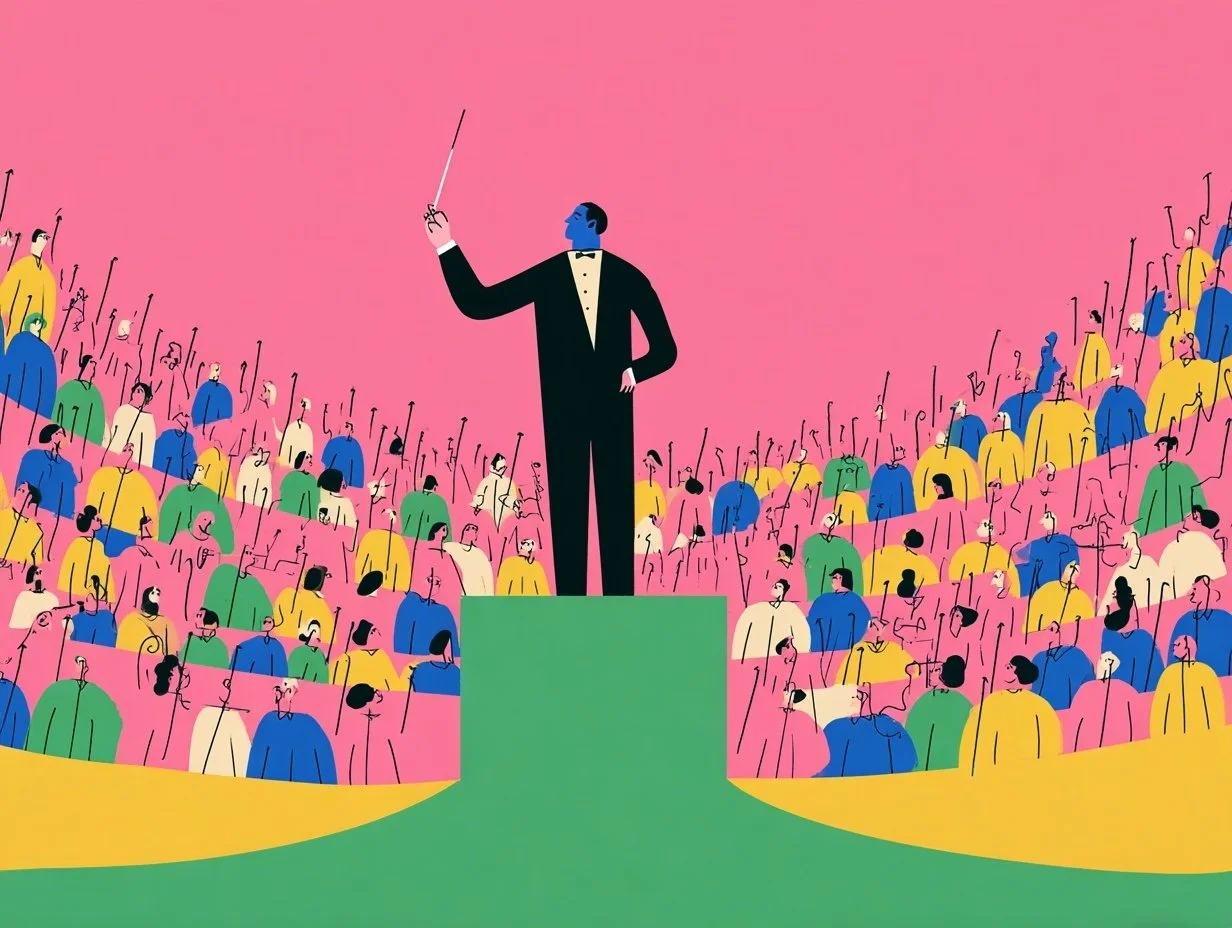
Your job just shifted up the stack. You're not the operator anymore. You're the director.
What actually shipped (in 90 seconds)
Available on every Claude plan including Free — which most coverage is glossing over.
The headline grouping for design-shaped readers:
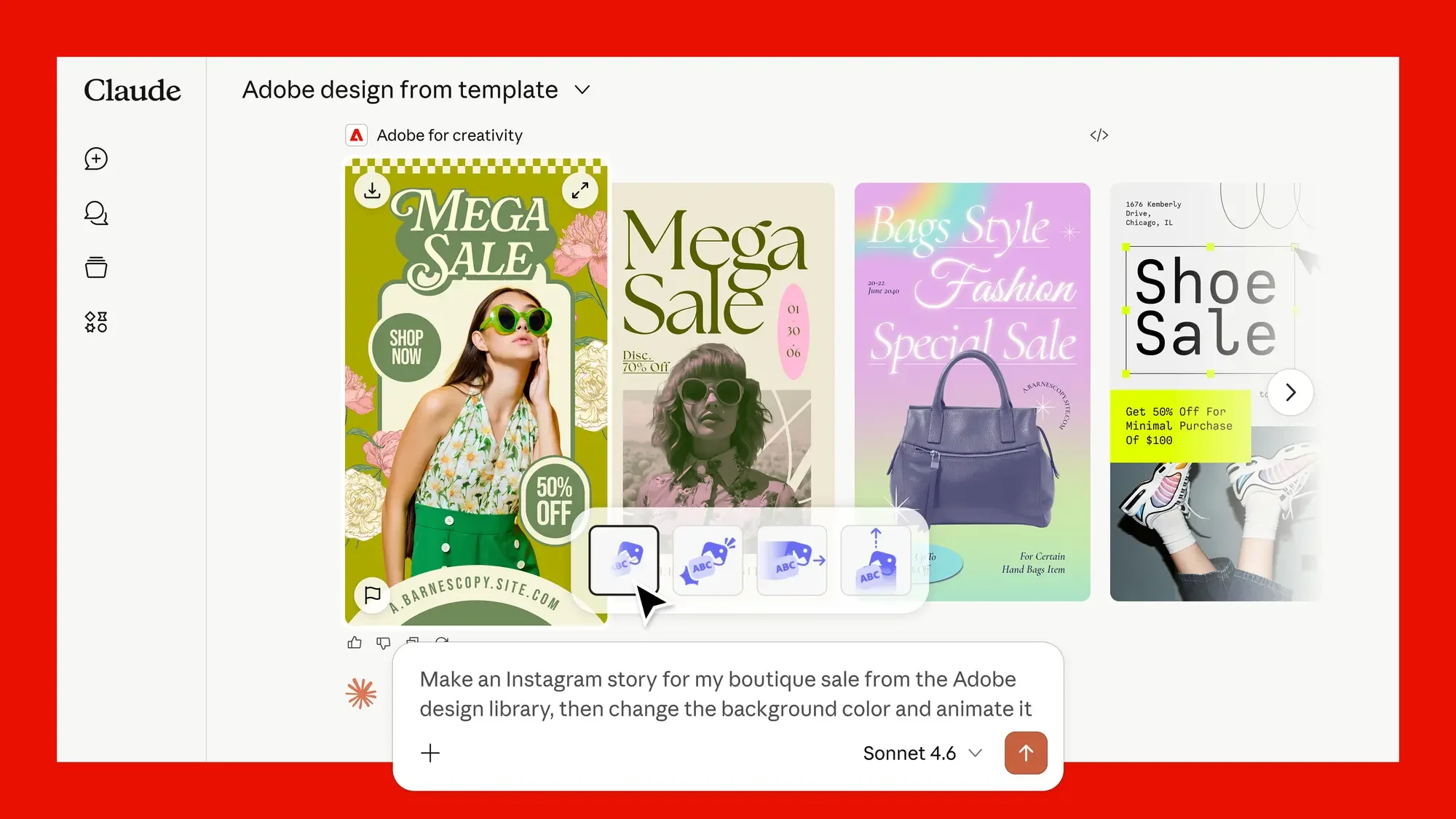
Adobe for creativity is the centrepiece. It exposes 50+ tools across Photoshop, Illustrator, Firefly, Express, Premiere, Lightroom, InDesign and Adobe Stock, and orchestrates them in sequence based on a plain-language brief. The "50+" number refers to granular capabilities — remove background, generate 9:16 variant, apply preset — not 50 separate apps. Read the marketing carefully.
Blender gets a natural-language interface to its Python API: scene analysis, batch scripts, custom tools added directly to Blender's UI. Anthropic also became a Blender Development Fund patron — a soft-power gesture aimed squarely at the open-source crowd.
Affinity by Canva is the sleeper. Batch image adjustments, layer renaming, file export, custom features generated inside Affinity. Worth flagging because Canva acquired Affinity in 2024 specifically to court the boutique-designer-leaving-Adobe market — your exact world.
Then six others — Autodesk Fusion, SketchUp, Ableton, Splice, Resolume Arena, Resolume Wire. Skip them unless you work in motion, 3D, or live AV.
There's also a critical caveat almost no one is reporting honestly: Adobe lists Illustrator and InDesign as integrated apps, but the actually-shipped skills at launch are six, all photo, social, or video focused. Real vector authoring? Multi-page editorial layout? Not yet. Post 2 in this series tests exactly that — and the results are coming.
This isn't nine launches. It's one architectural move.
Most outlets are treating April 28 as nine separate product announcements. It isn't. It's one architectural move dressed up as nine.
The sharpest framing of what just happened comes from Italian commentator Pasquale Pillitteri, and it's the one line you actually need to remember from the entire news cycle:
"Canva integrates AI into its tool, Claude integrates the tool inside the AI."
Read that twice. Two opposite architectures. One of them is winning.
For thirty years, "AI in design software" has meant a chatbot or a feature inside the app you already use. Photoshop adds neural filters. Illustrator adds Generative Recolor. Canva builds Magic Studio. The app stays the centre of gravity. The model is a feature.
What Anthropic just did is invert the entire arrangement. The model is now the centre of gravity. The apps are endpoints it calls when it needs them. You don't open Photoshop. You tell Claude what you want, and Claude opens Photoshop. Or Lightroom. Or Premiere. Or all three in the order it decided, while you're making coffee.
If that sounds like a small distinction, think of it this way: it's the difference between owning a kitchen full of pans and hiring a chef who knows when to use which. For thirty years Adobe sold you better pans. On April 28, Anthropic hired you a chef and told the pans to answer when called.
This is not a feature update. This is a relocation of where creative work originates — and the fact that Adobe shipped the partnership eleven days after Claude Design dropped is the loudest possible signal that they know it.
Intent. Constraint. Execution. The framework just got proven.
In the December piece I argued we were watching an early separation of three layers of creative work:
Intent — what you want to make
Constraint — what the brand, brief, and audience demand
Execution — the actual production
The argument was that chat becomes the intent layer, professional tools become execution engines, and the value of design work shifts upward, toward judgment, taste, and direction.
April 28 didn't disprove that argument. It made it shippable.
Here's what's now true in plain language:
Intent is yours. The connector cannot decide what your brand should be, whether a refresh deepens or erodes equity, or what your client's founder actually means when she says she wants it to feel "more confident." This is the part of the work the model is structurally built to defer to a human on. Anthropic's own framing, to their credit, says it directly: Claude can't replace taste or imagination. They mean it. They also know the rest of the work is fair game.
Constraint is shared. You set the rules. The connector applies them. Brand colours, dimensions, tone, format. The connector enforces — it doesn't decide.
Execution is theirs. The long tail of design work that has been quietly funding half the freelancers in your network — banner resizes across eight platforms, batch headshot retouching, social asset adaptation, template fills, video reformatted for Reels, Shorts, TikTok, and the LinkedIn version your client's CMO insists on — is now compressed. Hard. Now. A client with a $20 Claude subscription and a free Adobe ID can produce most of that output in fifteen seconds without opening Photoshop. That's not a forecast. It's shipping today.
Mike Monteiro put it cleanly: "Design is the intentional solution to a problem." Intent is the last thing to be automated. April 28 is the day everything around intent got industrialised.
Your job just shifted up the stack
If you take one frame from this whole launch, take this: you're not the operator anymore. You're the director.
Tibor Kalman — provocateur, M&Co founder, the patron saint of designers who refused to stop thinking — put it long before any of this: "Designers are trained to speak in a visual language. But that doesn't give us the right to stop thinking." The connector launch is the most aggressive version of that argument the industry has ever been handed. The visual language is being industrialised. The thinking is what's left.
This is the Cyborg posture I've been arguing for two years, and the connector launch is the proof point that makes it undeniable. Your job in this new arrangement isn't to fight the connector or pretend it doesn't exist. It's to direct it the way a creative director directs a studio:
Brief well
Set constraints
Reject the generic
Approve the distinctive
Send things back when they're not yet at brand
Know when to leave the chat and finish in the apps
If your creative process is type prompt, accept first result, ship it — that's not a process. That's a coin flip with extra steps. And the connector is about to give you a lot more first results to coin-flip on.
What to actually do this week
Three things. None of them are "panic." None of them are "wait and see." Both responses are wrong.
1. Install the Adobe for Creativity connector. It's free on every Claude plan. Do it tonight. Don't read another think-piece before you've used it — twenty minutes of prompts will teach you more than twenty more articles will, mine included.
2. Run it on a real client task — not a sandbox. The point isn't to be impressed. It's to find the seam. Where does it work? Where does it bluff? Where does it confidently fail in ways that would have embarrassed you if you hadn't checked? That seam is where the next eighteen months of your billable hours live. Find it now, not when a client surprises you with it.
3. Separate concept from production in your next pricing conversation. This is the structural move. Concept, identity, and brand thinking get priced one way. Production, adaptation, and rollout get priced another. The connector makes the case for you — pretend it doesn't exist and you'll be negotiating against a $20 Claude subscription whether you mention it or not.
Test the thing. Find its limits. Direct it like a studio. Charge accordingly.
What's coming next in this series
Post 2 lands later this week, and it's the part the rest of the internet isn't doing yet. I'm taking real Illustrator and InDesign files — the stuff brand designers actually live in — and seeing what the connector does when you point it at vector authoring and editorial layout, not photo retouching. Adobe lists those apps in the marketing. Adobe shipped exactly zero dedicated skills for them. There's a story in that gap, and I'd rather find it for you than let you find out the hard way at 11pm on a deadline.
FAQs
Q: What are Claude's new creative connectors?
A: On April 28, 2026, Anthropic launched nine connectors that let Claude operate inside professional creative software including Adobe Creative Cloud, Blender, Affinity by Canva, Autodesk Fusion, SketchUp, Ableton, Splice, and Resolume.
Q: Is the Adobe for Creativity connector free?
A: Yes. It's available on every Claude plan including Free. Signing in with an Adobe account unlocks higher usage limits and additional tools.
Q: Does this replace Photoshop, Illustrator, or InDesign?
A: No. The connector orchestrates Adobe tools through natural language but the apps themselves remain the execution layer. Adobe explicitly positions the connector as hybrid — orchestration in chat, refinement in the apps.
Q: Can the connector edit Illustrator or InDesign files?
A: At launch, the shipped skills cover photo, social, and video tasks. Adobe lists Illustrator and InDesign as integrated apps, but no dedicated skills for vector authoring or editorial layout shipped on April 28. We're testing this directly in Post 2 of this series.
Q: Should designers be worried?
A: No. The connector compresses the executional middle of design work — repetitive production — and increases the value of concept, taste, and creative direction. The designers who thrive will be the ones who treat April 28 as the day they were handed a production team to direct.
Final thought
The future of design isn't AI versus human. It's humans who direct AI versus humans who don't. Eleven days from now, that gap will be wider than it is today. Pick your side.
Want the full framework for working this way — Cyborg posture, real client workflows, the difference between prompting and directing? The next AI Branding Masterclass cohort is open for enrolment now.