
ANYBODY CAN GENERATE. ALMOST NOBODY CAN DIRECT.
What the AARON Awards reveal about craft, quality, and what “good” actually means when AI is in the room.
Here’s a sentence that would have sounded unhinged three years ago: the world now has too much creative work.
Not good creative work. Just… work. Volume. Output. An infinite scroll of images, ads, campaigns, and concepts that could have been generated by anyone, anywhere, with a ten-word prompt and four seconds of patience. The tools got powerful. The craft conversation got quiet. And somewhere in the middle, the advertising industry kept handing out the same trophies to the same people and calling it progress.
That’s the gap Marie-Céline Merret Wirström decided to do something about.
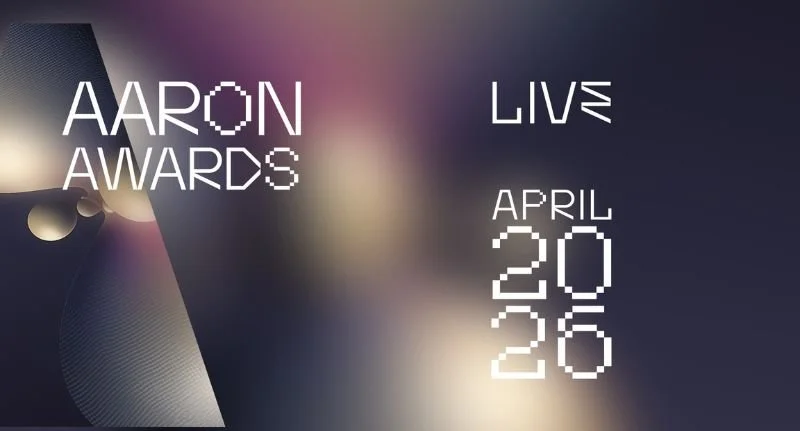
She’s the Co-Founder of the AARON Awards — the world’s first awards program dedicated to AI craft in advertising. Not AI as a subcategory bolted onto an existing show. Not a festival for experimental films nobody will ever see attached to a real brief. An awards program built from scratch, with one very specific question at its centre:when AI is the primary creative medium, what does genuinely good work look like?
It’s the question the industry has been avoiding. She’s been answering it. And onTuesday 24 Marc, she’s bringing that conversation to the Creative Futures Hub on Tuesday 24 March, she's bringing that conversation to the Creative Futures Hub.
The Award Show problem nobody was talking about
When AI started producing commercially viable creative work, the advertising industry did what it always does with uncomfortable new things: it added a category.
Suddenly, every major award show had an "AI" bucket. Entries poured in. Work that looked AI-generated mostly because it was AI-generated, with all the telltale signs: overlit skin, physics that don't quite behave, emotion that's technically present but somehow nowhere. Judges assessed it against frameworks built for an entirely different kind of making. Winners were announced. Everyone moved on.
The problem wasn't that the big shows were bad. It's that they were built for a different creative class. The most inventive AI work in advertising wasn't coming from holding groups with proprietary platforms and a dedicated AI team. It was coming from solo creators, boutique studios, and independent makers who had gone deep on the tools, people who'd built actual craft, actual workflows, actual taste in a medium that was three years old. These were the people producing work that made you stop scrolling. And they weren't winning anything.
The AARON Awards were built for them. Named after AARON—the pioneering AI art system, one of the earliest examples of machine-generated creativity—the awards put AI-native creators at the centre of the industry conversation, not the footnote of it.
What the AARON Awards are actually judging (and why it's hard)
Here's the thing about judging AI creative work that nobody tells you until you're in the room trying to do it: the bad stuff is easy to spot and the great stuff is invisible.
Bad AI work announces itself. The uncanny valley vibes. The prompt-shaped thinking where the concept is clearly "make a dramatic luxury car ad" rather than an actual idea. The work that looks impressive for thirty seconds and then evaporates, nothing sticks because nothing was directed. It's the visual equivalent of empty calories.
Great AI work? You might not know it was AI at all. And that's not a tric… it's craft. It means someone made real decisions. An art director with a point of view shaped every frame. A creative instinct said no to the first seventeen outputs and yes to the eighteenth. A producer understood the difference between what the tools can produce and what the brief actually needs.
The AARON Awards judging panel has one clear mandate: AI should be a true creative medium, not a gimmick. That means commercial work sits at the centre — not experimental films that look beautiful in a festival context and would never survive a client presentation. Speculative work is recognised, but in its own lane. The main event is always the hard question: does this work hold up creatively, commercially, and reputationally?
As MC puts it—and this is the line worth writing down—the job is to protect ideas from bad AI decisions. Not to celebrate the tool. To protect the idea.
Massimo Vignelli once said: "The life of a designer is a life of fight: fight against the ugliness." The AARON Awards are, at their core, that same fight — just with a new set of weapons on the table.
What the industry got wrong about AI and quality
There's a persistent myth that AI democratises quality. That because anyone can use the tools, quality naturally rises across the board. More people making things means more good things. Math, right?
Wrong. What AI actually democratises is volume.
When generation is cheap and fast, average output becomes infinite. Every brand, every agency, every freelancer can produce something that clears the bar of "visually acceptable." The bar clears. The work piles up. And the gap between acceptable and genuinely good, between output and craft, gets wider, not narrower.
This is exactly what MC and her co-founder Vinne Schifferstein were watching happen when they built MC&V AI Creative Production. Two years of delivering live campaigns, real briefs, real timelines. What they kept seeing: clients and agencies who thought AI was a shortcut to quality, when really it was a shortcut to volume. Finding one person who "knows AI" and expecting magic. Skipping the design thinking, the art direction, the iteration, the judgment calls: all the things that separate a campaign from a generation.
The most inventive AI work isn't coming from large networks, MC has said publicly. It's coming from creators and AI-first studios.
The designers and independent creatives watching from the outside, the ones feeling the pressure but not yet in the room, are closer to that creative class than they think. The skill gap isn't prompt literacy. It's art direction. It's taste. It's knowing what to ask for and how to know when you've got it.
Which, let's be honest, is exactly what designers have always been trained to do.
What this means for you (yes, you)
If you're a designer or creative who has been watching the AI conversation with a quiet mix of curiosity and what does this mean for me, this is your entry point.
The AARON Awards don't just tell us what good AI advertising looks like. They tell us what skills are worth having. If the most awarded work in AI advertising is defined by craft, art direction, taste, and the ability to protect an idea from bad decisions, then the designers who spend their careers developing exactly those skills are not threatened by AI. They're the ones the industry will increasingly need to direct it.
This isn't a comfort blanket. It's a structural argument. When output is infinite, judgment is scarce. When generation is instant, art direction is everything. When anyone can produce a version, the person who knows which version is right becomes the most valuable person in the room.
AI makes average infinite. Your taste is what's scarce.
That's not a hot take. That's what the AARON Awards are literally built to prove.
Come and hear it from the person who built the standard
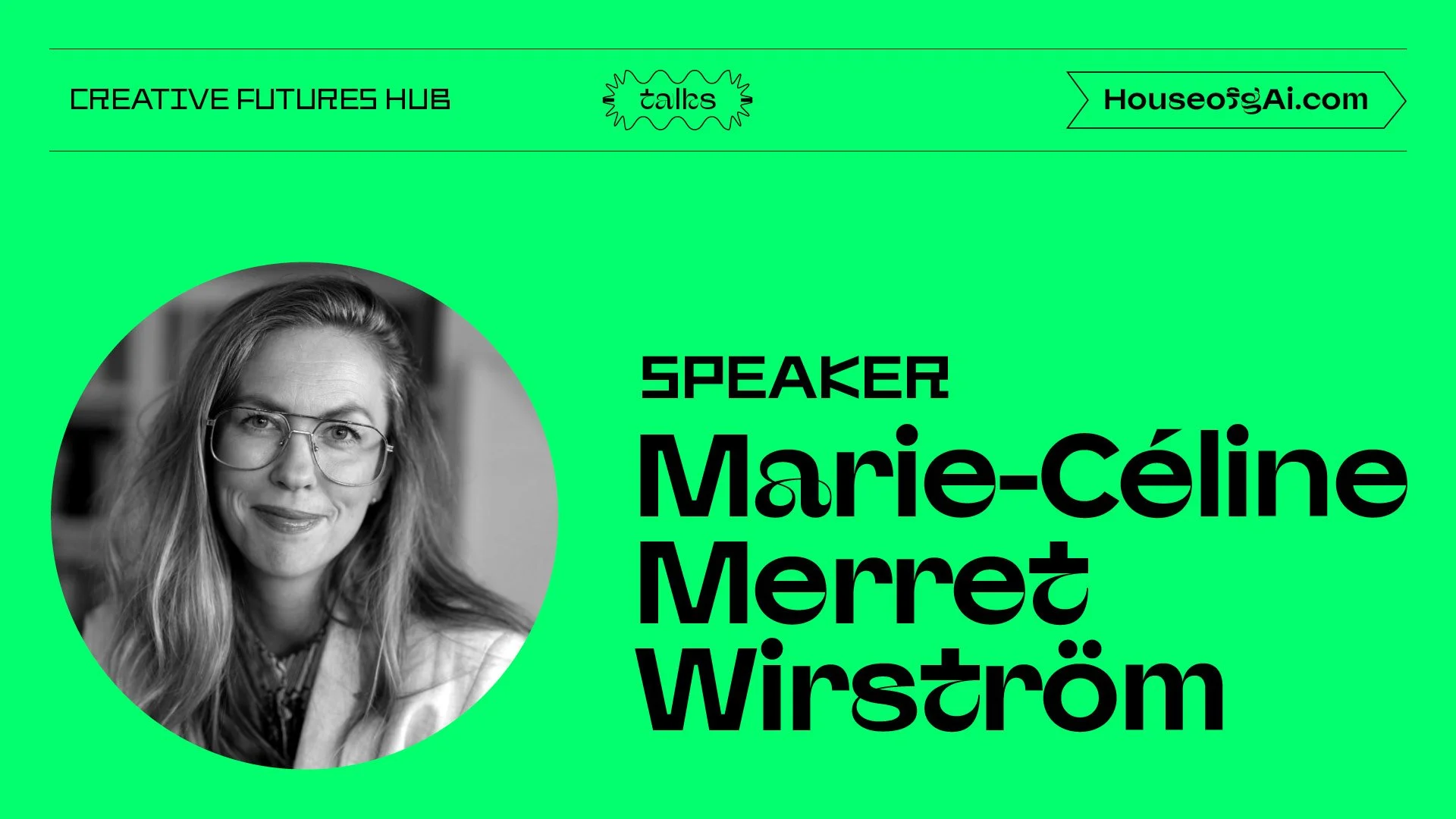
On Tuesday 24 March, Marie-Céline Merret Wirström is joining us for a live fireside chat on the Creative Futures Hub.
We'll be getting into all of it: what it actually takes to judge AI creative work, what the best work she's seen has in common, why solo AI creators are building without the support infrastructure they need, and what the gap between industry hype and commercial reality looks like from inside the trench.
This is a 30–40 minute conversation followed by live Q&A. It won't be polished. It won't be a panel with talking points. It'll be an honest exchange between two people who care about what happens to craft, quality, and the designers doing this work — during the most interesting and most chaotic moment the advertising industry has seen in decades.
8:00 AM AEST · 3:00 PM CST · 9:00 PM GMT
Not a member yet?
👉 Join the Creative Futures Hub
FAQ
What are the AARON Awards? The AARON Awards are the world's first dedicated awards program for AI craft in advertising. Founded by Marie-Céline Merret Wirström and Vinne Schifferstein, they were built to recognise solo creators, AI-native studios, and independent makers producing commercially grounded AI work — not just experimental films or spec campaigns. The inaugural show runs in April 2026.
Why does advertising need a separate AI awards program? Existing award shows added AI subcategories, but those categories were largely built around large agency infrastructure. The AARON Awards were created specifically for the rapidly growing class of independent AI creators and boutique studios whose work was producing some of the most inventive output in the industry, going unrecognised.
What's the difference between good AI advertising and AI slop? Great AI advertising looks like it was directed. Specific creative decisions shaped every element: the concept, the visual language, the output selection. AI slop looks like it was generated. No point of view. No evident taste. Technically adequate, emotionally absent. The AARON Awards judging criterion is simple: is AI being used as a true creative medium, or as a shortcut?
Who is Marie-Céline Merret Wirström? Marie-Céline is Co-Founder of MC&V AI Creative Production and the AARON Awards. With 15 years across New York, Paris, and Sydney, she built high-end AI creative production at Clemenger BBDO's MADE THIS and helped establish Media.Monks in Australia and New Zealand. She has spent two-plus years delivering live campaigns with AI — not theory, not experiments. Real briefs, real clients, real timelines.
What is the Creative Futures Hub fireside about? It's a live, honest conversation about what commercial AI production actually demands: the craft, the judgment calls, the gap between hype and reality, and why solo AI creators are building without the support structures they need. Plus live Q&A from the community.
When and where is it? Tuesday 24 March 2026. 8:00 AM AEST · 3:00 PM CST · 9:00 PM GMT. Live on the House of gAi Creative Futures Hub. Access for VIP Hub members.
I'm a designer who doesn't work in advertising. Is this relevant to me? Yes — directly. The craft conversation the AARON Awards is having applies to any creative using AI tools. What separates great AI-assisted work from forgettable work is the same whether you're making ads, brand identities, editorial illustration, or motion. Art direction. Taste. Knowing which output is right. That's the conversation.